Showing posts with label library. Show all posts
Saturday, November 4, 2017
Odd Thomas by Dean Koontz
Photo: paperback book cover, from its Goodreads page
I haven't read a Dean Koontz book since the 90s, when he wrote about gov't conspiracy crap. Dan Simmons' Flashback reminded me of that stuff, and Flashback was every bit as crappy. I mean, really bad. A shame, because Koontz in the 80s was almost as good as Stephen King, and sometimes better. Koontz's A Bad Place, Phantoms and Whispers, among a couple others, were really good then, and hold up very well now. So it was with some trepidation that I started Odd Thomas; but I did so because it got some really good reviews, because I'd heard good word of mouth, and because I'd seen it at a lot of yard sales, which is a good thing--because it means that people bought it to begin with, rather than just renting it from a library.
I'm happy to report that Odd Thomas is mostly very good. The narrator is likeable, though perhaps a little too much so, but whatever. The supporting characters are well-drawn and pleasant to deal with. His small town is well-wrought. And of course you love his flame, who Koontz fates with writerly tricks, in a kind of double-twist at the end. He knows you like her; he knows you want her to do well; he knows you expect that she won't; he knows you'll appreciate it when she seems okay. And then...
I knew it was a series, of course. And, knowing that, I see where Koontz also realizes it's a series, especially towards the end when one of the lovely nurses practically throws herself at him. That's when you know the fate of someone else, too. But it's all very good, if not over-the-top at times (especially with an Elvis who can't stop sobbing hysterically), and overall the book deserves the positive responses it's gotten. I don't know if I'm going to read any of the others in the series, but I guess I will if I run into one at a library or a yard sale, or something. I should mention that I'm a little concerned about Koontz's prodigious output, which makes King seem under-published by comparison. Does he write every word of a book that has his name on it? I don't know. I think he does here, but overall I don't know. The tone and patterns of this book do not match those of the ones I read of his in the 90s, which is a good thing. He could've changed, of course, but writers usually don't. He does still go on and on a little too much. I skimmed a few pages in this one; otherwise it would have gotten five stars. I didn't skim pages that were badly written, though; they just seemed superfluous. He goes on, for example, about a spider in the desert, for about 4-5 pages. The spider never does anything to him, nor he to it...so I skimmed some pages, but that didn't hurt the quality of the book overall.
You'll like the characters and you'll feel for them, and the overall suspense is gripping. You may wonder, as I did, how three psychopaths could all function unnoticed in a small desert town. From what I know about them, they can't hide too well for too long, especially in a sparse population, without people whispering, or their behavior being noticed. And at high profile, highly public jobs? But that, oddly, didn't detract, either, so that's good. I guess this book works despite a few things, but it works nonetheless, and is therefore highly recommended. I read it all in one day, which also speaks well for it.
Labels:
80s,
90s,
A Bad Place,
book,
conspiracy,
Dan Simmons,
Dean koontz,
fate,
gov't,
library,
narrator,
Odd Thomas,
Phantoms,
psychopath,
series,
Stephen King,
trick,
Whispers,
writer,
yard sale
Thursday, October 19, 2017
Gwendy's Button Box by Stephen King and Richard Chizmar
Photo: from its Goodreads page
More a morality tale / fairy tale than novel (or novella), and a lot more Chizmar than King, but still an okay read that goes by fast. Since it's more of a fairy story, the characterizations are purposely light, the action is more to learn from than to entertain, and it's all supposed to be a slight breeze. To expect more is to be disappointed.
The ending didn't work for me, as it's more explanation than resolution. Richard Farris (AKA, Randall Flagg) will disappoint, as he seems like someone kinder than we know him to be. Here, he's more like the old man from Hearts in Atlantis than the badass from The Stand and The Dark Tower. He should've been called someone else here, with different initials. He's really a different character. In this way, he's more of a disappointment than is the talky, explanatory ending itself, but the book is so slight that you really won't mind. Like all morality tales, the ending is explained too much and is too completely wrapped up. I would've rather had something extra left over to think about, but that won't happen here. Is it more Gwendy, the box, or just life itself? You'll be told, which is a bummer. Should've been left more open-ended.
And, lastly, you won't see anything Dark Tower-ish here. Mr. R.F. and the box are just extras stepping out. You won't be able to place them within the Dark Tower's milieu, so don't try. There's no leftover strand, or beam, and those worlds don't influence this one in this book. If you want a standalone book that has tendrils and whispers of The Dark Tower, check out King's The Wind Through the Keyhole, which was quite a bit better, and released to very little fanfare. That one is a Dark Tower rejected section or chapter if I've ever seen one.
So you'll have to take this book on its own purposely slight merits, and judge them by those. I think it's pretty clear to see where King starts off and Chizmar takes over. This would've been darker, more ponderous and a lot less slight if King had written a bigger chunk of it. My guess is that King started it, maybe the first two or three chapters, and included the kite scene and maybe a hat scene or two, but let Chizmar take it. My guess is he figured The Wind Through the Keyhole was one Dark Tower standalone enough, and he didn't need another one. I'm guessing Chizmar stayed as far away from The Tower as he could. Perhaps he was asked to.
This one was more of a curiousity for me. I don't consider it part of the King canon and I won't be buying one for my entire First Edition Stephen King book collection. My copy was from the library, where it will return tomorrow. So if you want a quick little book / morality tale that's maybe 20% King, max, give this one a shot. It's not bad, but it's not King. If you have other King books that you need to get to, you're probably better off doing that.
Labels:
%,
Atlantis,
book,
collection,
edition,
fairy tale,
fantasy,
first,
hat,
Hearts in Atlantis,
judge,
kite,
library,
Randall Flagg,
Richard Chizmar,
Richard Farris,
Stephen King,
The Dark Tower,
the stand,
tower
Monday, March 28, 2016
Death of the Hired Hand by Robert Frost
Photo: Haymaking, undated, oil on canvas by American artist Dwight William Tryon (1849–1925). Image courtesy of The Athenaeum. (I stole this from the Library of Congress's website of Frost's poem, "The Death of the Hired Hand," which you should read by clicking this link, or the one below.)
So I'm back to the Library of Congress's "Story of the Week," though I'm as behind on them as I am on my work and on my writing. It seems that I'm always behind everything these days, including my sleep. (Though, thankfully, not my mortgage.) Actually, I am very behind on my "Story of the Week" emails, which I have sent directly to me. That causes the backlog, of course, but they are definitely worth it. As far back as I can remember, I've only read maybe five that I didn't care for. (One, recently, was about Henry James's last assistant in his final eight years. I thought she'd have more fascinating things to say about the latter 19th Century's more famous writers, but mostly she just wrote about how he changed a lot of wordy sentences in his most popular works. She says some things that directly contradict what I've read about him; the worst was when she said he never used his fame to threaten or to use against somebody for nefarious purposes--which is a lie.)
Anyway, I just read "The Death of the Hired Hand," by Robert Frost. It's the one with the famous lines: 'Home is the place where, when you have to go there,/They have to take you in.'
This line is meant much more negatively than you might think. It's followed by 'I should have called it/Something you somehow haven't to deserve.' It's said by a farmer whose hired hand keeps taking off on him, so the guy is someone you can't trust, but who you feel obligated to take back in again. Not because you've missed him, but because he's like a lost dog and you pity him. The famous line is said by most (who haven't read the poem) as a line that someone will say about actual family who has to take you in because they're family. But Frost, who was shockingly cold and quite the nihilist, meant it to come from the POV of the farmer saying it, and not from the POV of the one who has to go home. It's not meant nicely, and those who say it like it is, like they have to be allowed in, are missing the point that they're supposed to feel like the pitied, like they'll be let in like the neighborhood's wet mongrel who people just can't leave out in the rain. The line means you'll be taken in not because of family obligation, but because of pity. The hired hand, in fact, had a brother who lived just 13 miles away, but this brother was a banker, and the hired hand didn't want to be pitied by his brother the banker. He'd rather be pitied by the farmer he keeps deserting. Again, the famous lines make more sense knowing the whole poem. And it ain't pretty, and it ain't happy. Frost is rarely either.
Frost is often misread, mostly because of those campfire poetry readings where he came across as a pre-Mister Rogers Mister Rogers.
I've got an English degree, but I somehow managed not to read too much of Frost. I guess I thought it was mostly homespun but drawn-out wisdom, amongst quaint New Englanders, who mostly keep to themselves. Good fences make good neighbors, after all. But there's a lot of genius there, and Frost is a magician who ably hides his literary tricks, which most poets seem incapable of doing. I don't see the obvious alliteration or cadences in Frost that I spot elsewhere, and when I see those, I lose my suspension of disbelief. (I speak like I'm Shakespeare, though my poetry mostly sucks. I've written exactly one that's sold.)
But I've mostly liked what I've read, though I stayed away from his longer ones, like this one. This poem is almost a short story, really, and is almost completely in dialogue, which I don't like in my poems. I also don't like them long, as per Edgar Allan Poe's dictum that all poems should be short--and then he wrote long ones. But I liked this one now, though I didn't when I was younger, perhaps because I didn't get it, or because I felt I might be the one who would have to go home and be taken in--and thereby pitied. Which I kinda was, I think. Best not to think about that now.
At any rate, there's genius here, and a message about human nature. You'll feel like you're the farmer who keeps getting deserted, yet you'll also feel like the hired hand, who keeps deserting, and then coming back with his tail between his legs. You might feel like you're the banker up the street, if you're lucky.
But sooner or later we're all the hired hand who lays down for the last time. And when that moment comes, you have to decide who you're willing to be a burden to.
Like I said, it ain't pretty, and it ain't happy. But it's real, and it's true. That's Frost's genius.
Labels:
congress,
Death of the Hired Hand,
Edgar Allan Poe,
farmer,
henry james,
home,
home is the place where,
library,
Library of Congress,
New England,
Poe,
poem,
Robert Frost,
Shakespeare
Tuesday, May 12, 2015
Post A Book-Selfie and Support Schools and Libraries
Photo: Kami Garcia, and a good book.
Dear Blog Readers:
Below is an email sent to me from Kami Garcia, author of the Dangerous Creatures series. Rather than using her publisher's marketing budget to, well, market her book, she has nicely asked for that money to be used to buy books for schools and libraries in need. (This is an unbelievably nice thing to do, considering the book market today.) Unfortunately, I don't Tweet, and I don't have a Twitter account, so I'm hoping my readers will take part in this worthy campaign, in place of my un-technologically advanced self. Please and thanks!
[Now that I went to the website, I see that this is something I can do because it's not a Twitter page. Or is it? This sort of proves my point about my tech savvy, but whatever. I'll post a book-selfie--but you should also do the same!]
Here's her email to me:
_____
Hi guys!
Reminder: The #booksarentdangerous campaign kicks off today at 9 AM PST / 12 EST.
Short explanation: Dangerous Deception comes out in a week, and instead of a traditional campaign, we got our publisher (LBBYR) to donate our marketing budget to buying books for underfunded schools and libraries.
You are all invited to join in the fun & help get books onto the hands of needy kids!
Attached is the campaign graphic, in case you wanted to share it anywhere, and/or point people to booksarentdangerous.com whic h is where we will be posting campaign details as well as resources for book donations in the days to come. (Feel free to share yours as well!)
But also hopefully this: donate a book and encourage your readers to put up a pic and do the same!
Remember to use the hashtag #BooksArentDangerous. It can be any book that you loved, that mattered to you, or that you recommend.
LBBYR will take each picture as your pledge to donate a book to an underfunded school or library and will match these donations throughout the next two weeks.
Let's get some books into the hands of kids in our local school libraries! Pass it on!
Again, questions to shanepangburn@gmail.com.
And this concludes our spam. Love to all!
XOXO Kami & Margie
Wednesday, September 10, 2014
Library of America: War of 1812
From the weekly emails I get from the Library of America, here's what I've gleamed from the journal of British soldier George R. Gleig, who assisted in the burning of the White House, the treasury, and the Capitol.
For this entry, we'll focus on what British soldier Gleig wrote about what he saw when he helped burn D.C.
--First, this was not mentioned in either account, but was in the summary: When British Admiral George Cockburn arrived in the city, he searched for the offices of the National Intelligencer, which had long been insulting and taunting him, and oversaw personally the destruction of the pressroom. Spectators overheard him denouncing the publisher “with much of the peculiar slang of the Common Sewer.” The Encyclopedia of the War of 1812 mentions a contemporary report claiming that the admiral instructed soldiers to “take special effort to obliterate all of the c’s in the newspaper’s type racks” so that the publisher could no longer spell Cockburn’s name. Amusing. If the Admiral was that thin-skinned dealing with a foreign newspaper, how could he have been with the papers, politicians and brass in his own country?
From Gleig:
--The inhabitants of D.C. were so sure of victory over the British that they didn't leave the city--until the British troops were actually in it. This includes Madison, the President, too.
--The withdrawal of the President was so quick and last-second that he left a gourmet dinner for 40 still hot on his table, with many bottles of wine open and ready. All of this was enjoyed by the British troops before they torched the White House. "[After speaking to the troops, President Jackson] hurried back to his own house, that he might prepare a feast for the entertainment of his officers, when they should return victorious. For the truth of these details I will not be answerable; but this much I know, that the feast was actually prepared, though, instead of being devoured by
American officers, it went to satisfy the less delicate appetites of a party of English soldiers."
--The British were surprisingly humane. Though they burned the White House, the Capitol and the Treasury (and "a noble library"), they let all of the other houses stand--except the home of the guy who killed the General's horse.
--All of the citizens of D.C. were still there when the troops arrived because Madison had just crossed the only bridge that spanned the Potomac--and immediately ordered it burned: "...the rest were obliged to return, and to trust to the clemency of the victors." Thanks, Mr. President.
--All the National Archives were burned. Can you imagine the historical stuff that must've been in there? Things from the Pilgrims to the Revolutionary War--all lost.
--Greig wrote that the American forces vastly outnumbered his own--but they didn't (or couldn't) fight. He says the American forces should've been successful, no problem, but that the generals and soldiers didn't know what they were doing. Reminds me of the Northern generals defending D.C. in the beginning of the Civil War, just 49 years later.
--The Government section of D.C. was completely destroyed--and the awesome, mile-long wooden bridge, the National Archives, the White House (and all of the historically relevant things in it) and all of the early buildings, all built just 25-30 years before--if that. Devastating.
Labels:
1812,
America,
archives,
bridge,
British,
capitol,
Civil War,
D.C.,
general,
Gleig,
library,
Madison,
national,
Pilgrim,
Potomac,
president,
Revolutionary,
WAR,
Washington,
White House
Wednesday, August 14, 2013
Stealing Shakespare--The Shakespeare Thefts (book review)
Photo: A 1623 First Folio in the Victoria and Albert Museum, in London. From the Wikipedia page, "First Folio."
Extremely easy-to-read and interesting book, but probably only for those interested in Shakespeare, his folios, or really old books. I talked about this recently with a friend and she just rolled her eyes.
But I thought it was interesting, and the author's fascination and joy of his subject also leaps off the page. He clearly loves what he does, and he is clearly very knowledgeable of what he does.
What is that, exactly? Well, he's a Shakespearean scholar, and an overall authority on the 1623 Folio, and its 250 or so copies out there, out of the 750 total copies that had been made in 1623--and sold without binding. If you were alive in 1623, and if you bought the First Folio, you bought it in manuscript form--a pile of paper (or cloth, actually), and then you paid one pound extra (25% of your yearly average income in 1623) to have it bound, often in calf-skin. (The author, Eric Rasmussen, believes there are maybe 250 more out there, somewhere, possibly in boxes in libraries--or in somebody's attic.) His lifelong ambition: to very minutely survey and catalog every single copy of the 1623 Folio out there. To authenticate every page of every folio out there. To find missing folios. Why? Because they're frequently stolen, because even one in poor condition is worth a few million, and because...well, because he's sort of a fanatic about it. And I mean that in a very, very complimentary way. Had I the education of this stuff, and the time and the money, I would definitely join him on his travels. Though the whole waiting, and the dealing with people, I would have to leave to he and his team. I mean, if there were a painting of the real Shakespeare (there probably isn't one), wouldn't you want to own it, regardless of the value? (Rasmussen bought a painting he hoped would be of Shakespeare, since the provenance made it a possibility. But his purchase had been painted over. He still hopes it's Shakespeare, but it isn't.)
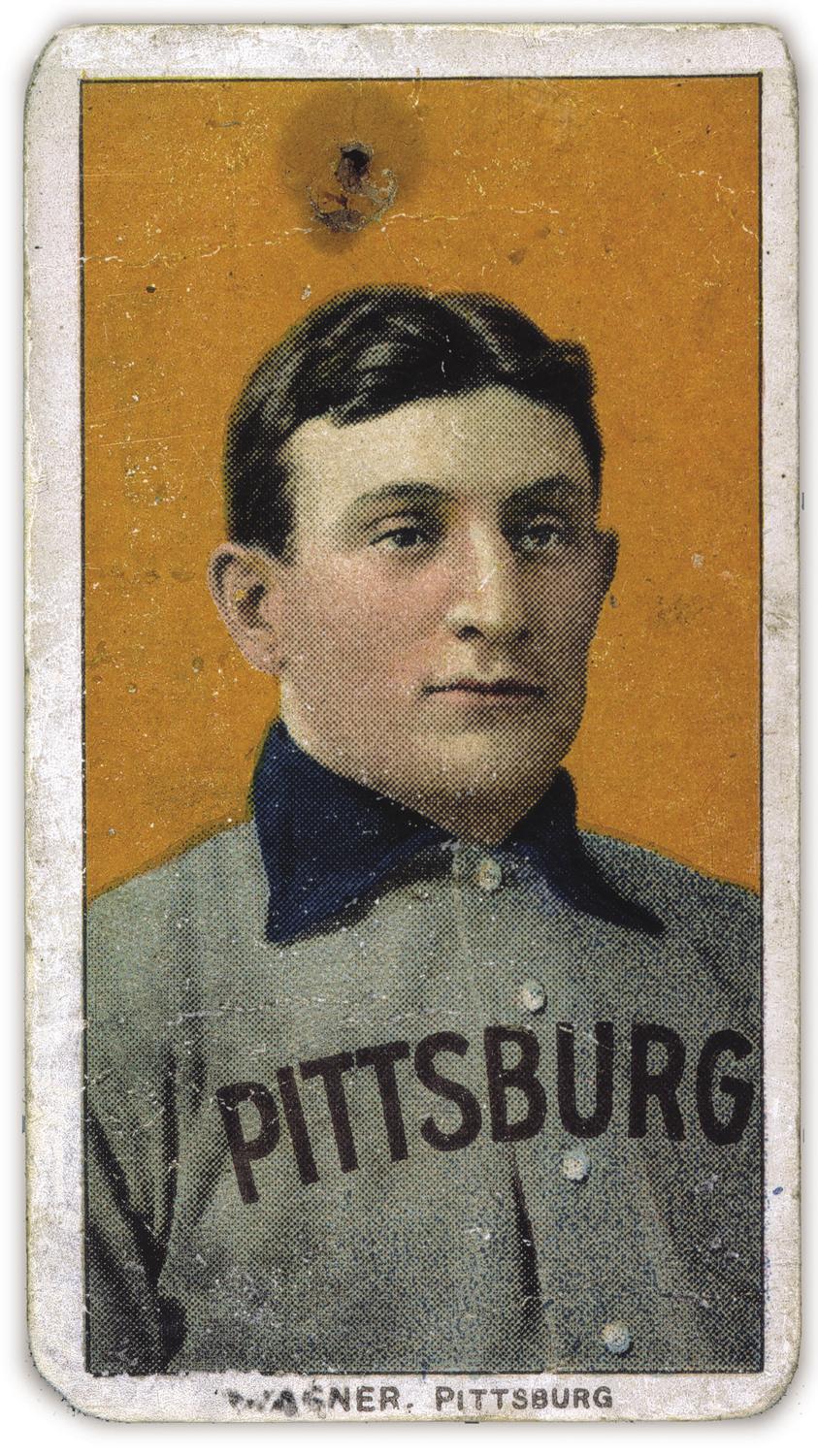
I don't know how to explain the joy someone would have about reading stuff like this, except to maybe give you an example. I'm sort of a nut about old baseball cards as well. The cream of the crop for such things is the 1909-1911 T206 Honus Wagner card, which even in poor condition is worth hundreds of thousands of dollars. A very good one sold recently for seven million dollars. People are absolutely fanatic about this card. Many would steal it, if given the chance--and not for the money. Just for the chance to hold one. And to own one? Heaven. Bliss. I feel that, too. I saw one a few years ago at the New York Public Library in Manhattan. Someone thought it would be a great idea to paste that one to a scrapbook page, so that all anyone would ever see of that card is the front of it. Not only does this greatly reduce its value, but it's not about the money--it's about the awesomeness of the card itself. If you can say, "So the hell what?" then maybe this book isn't for you. But if that makes you grind your teeth with frustration and anger, because some idiot made it impossible for anyone ever again to turn that card over to see the back, you'd enjoy this book. The card is so awesome that it deserves to get turned over and seen in its totality, you know? ::sigh::
The stories in this book about the trials and tribulations that people--and their folios--have undergone over the years matches the above example. People have stolen them just to have a copy. Just to hold it in their hands, to flip through the cloth pages, to...You get the idea. Being a Bardolater (supreme lover of Shakespeare) is probably a must to feel this way about the folios--which Shakespeare himself never got to touch. They were edited and collected by Henry Condell and John Heminges, actor friends of Shakespeare's, at great personal cost, in terms of money and of their effort and time, and published in 1623. Shakespeare died in 1616. If you didn't know any of this (I did), then maybe this book isn't for you. If the thought of holding one and leafing through its pages makes you giddy, then it is. I bought a facsimile of the 1623 Folio at a consignment store for $38, which still feels like a bargain to me. I have to admit that I'm a Bardolater.
You'll learn how some of them were stolen, how some were returned, how some are missing, and how some have mysteriously disappeared. For example: Sir Thomas Phillipps, compulsive collector of tens of thousands of very old and very valuable books, had a son-in-law who was in the habit of cutting up very old and very valuable books and scrapbooking some of his snippets. (If this makes you recoil in horror, as it does me, you'll want to read this book.) Well, this made Phillipps horrified as well, so to make sure that this son-in-law (married to Phillipps's only child) wouldn't cut up and scrapbook anything in his collection after he died, he had his entire vast library moved out of his mansion and moved into another, bigger, mansion, in 1863. He then had a will made up that said that nothing could be taken out of this second mansion, and that this son-in-law, and Phillipps's daughter, couldn't go into this mansion. (He had to do this because the first mansion hadn't been originally his, and his descendant had a will that didn't have these restrictions.)
Furthermore:
--this mansion was so huge that he rode a horse from room to room.
--it was so huge that prepared food would be served cold because the kitchen was so far away from the dining room.
--the book collection was so vast that Phillipps had to hire 175 men to drive 250 cart horses pulling 125 wagons to this second mansion 20 miles away. This took a few years.
And it didn't matter. Someone, probably the daughter or the son-in-law, stole the 1623 Folio anyway. And it's been missing ever since.
If the thought of a 1623 Folio being cut up and mutilated, and of a couple of these mutilations being scrapbooked, doesn't make you grit your teeth, Rasmussen's book isn't for you. Ditto, if you can't understand why someone would have so many books. I have a few thousand, none of them very valuable, so I can completely understand this.
Anyway, if owning a 1623 Folio just to own it, regardless of value, sounds super-awesome to you, read this book. It's a very fast and enjoyable read, at just 172 pages, minus acknowledgements and notes, which are sort of interesting as well. (The 1623 Folio, by comparison, had over 900 pages, and cost one pound--about 25% of the average worker's salary in 1623.)
Monday, April 8, 2013
Signs You Have Too Many Books
Photo: The Rose Main Reading Room of the New York Public Library, Manhattan
I realized recently--okay, I've had this "realization" frequently over the years--that I have a book-hoarding problem. You know, like those people on the show Hoarders, who have psychotic breaks when a professional therapist, visiting the squalid house, tells them that pooping and peeing on their stereo speakers because they have too much stuff in the way to make it to the bathroom is not a normal thing? Well, I'm not that bad, as my floors and hallways are mostly bare, but I have lots of piles of books in the living room, on the table, and on the kitchen table, and in my office on my desks and chairs. I have books in seven bookcases in the house, and in about nine boxes in the garage, and in a giant bookcase in the spare office/bedroom downstairs, which has ten deep bookshelves.
If this sounds like you, these are signs enough that you have a book-hoarding problem. But here are a few more signs that you have too many books:
--You find yourself reading six books at once, and yet you still look for more things to read.
--You realize that fifteen bookcases are not close to enough to hold all of your books.
--Your reading material in your bathroom impedes your path to your "favorite chair."
--And you look forward to needing to go to the bathroom so that you can read.
--You read much more than you need to in order to research your novel or story.
--You have so many books that you actually consider opening your own free library, somehow.
--Except that you don't want anyone else reading your books.
--You have so many books that you end up getting duplicates at yard sales or library sales because you forgot you had them to begin with.
--You buy books that your friends want to borrow from you because you don't want them to read yours.
--You own every book ever written by Stephen King, and Robert B. Parker, and Jonathan Kellerman, and Mickey Spillane, all of whom have written at least 40 books each.
--You've forgotten which books are in the seven or eight boxes in the attic and basement.
--You have about fifty anthologies of short stories, poems and short novels.
--You still have all of the books you ever needed to read in college, and you majored in English and Philosophy. That's a lot of required reading.
--You tell your friends that they should ask you if you have a book before they buy it, even though you have no intention of ever letting them borrow one. (See the comment five bullets above.)
--You have to instigate a policy of no book-buying for yourself.
--You promise yourself that you'll just get new books from the library, so that you can read them without being driven to keep them. And you know you won't follow through with this.
--You say to yourself that you won't buy anything new until you've finished reading all of the books you have, even though this couldn't possibly happen during what's left of your lifetime.
--You realize that you'd rather stay at home and read a lot rather than go to Disneyland or some such thing during your vacation.
--You think that the best thing about summers is the reading you can do on your house deck or in your house in the central air.
--Your favorite characters are more endearing to you than are your favorite people.
--You realize that you like more characters than you do real people. And you're okay with this.
--You think that e-readers of any kind are blasphemous.
--You have books by Wilkie Collins on your computer desktop. Unread.
--You think that one of the best things about finishing a book is the review you'll write on Goodreads.
--Or for the blog entry, of course.
--You've considered wall-papering a wall with small posters of your favorite book covers.
--You can actually tell someone why the white bookcovers of the post-1990 Catcher in the Rye is a sinful, crying shame compared to the classic red carousel horse and NYC skyline of the original. And you sound like a lunatic doing so, and don't care.
--After you've recently shelved literally hundreds of books into your new library, someone says to you, "Are you actually keeping all of those?" You say, "Yes," and don't realize their incredulity until over an hour later.
--You've been in minor branches of public libraries with fewer books than you have in your house.
--You have five favorite genres.
--One of your favorite places in Manhattan is the New York Public Library. And an actual wish is to have one that's just as beautiful, if not a little smaller, in your house.
--You have three different editions of Shakespeare's Complete Works. And you're not getting rid of any of them.
--You realize you have more books in your home than some of the more poor schools do in their classrooms, their bookrooms and their libraries. Combined.
--You have over 30 bulleted reasons about why you have too many books, including this one.
Friday, March 8, 2013
The Wife of His Youth--Charles W. Chesnutt
Photo: Cover of the Library of America edition, from this link.
I wrote a blog last year about a very real-to-life and entertaining short story by this guy, here. Please read that one, if you haven't, before you continue on here. I just re-read it myself, since I wrote it last year, after all, and I'm still impressed that a man who could pass as white, as he was apparently 7/8 white, refused to do so, instead listing himself as African-American. He became a popular writer of short stories, and made apparently a very good living for himself, as he joined some high-falutin' social clubs, which is the subject of his ironic and classic short story, "Baxter's Procrustes," the subject of the linked blog above. So read that entry, and his story, too. The link to the story is in the blog linked above. (And a quick note about that entry: It continues to be one of the most popular I've written, as it consistently shows up on the side of the blog, in the "popular entries" section, which is generated by the numbers provided by Google's Analytics, not by me. As of this writing, it has been the second-most popular entry of the past month--and that entry was written on August 8, 2012.)
This entry is about "The Wife of His Youth," another story that could only happen to a man of mixed race, who comes across as white and who looks white, but who is not entirely white, and if I have written a more real but ridiculous sentence recently, I'm not aware of it, because why any of this matters is beyond me, anyway, and if you think this is crazy, Google the "One Drop Rule," which was an act actually passed by this country's local and federal Supreme Courts in 1910 and 1924. You won't believe it--or maybe you will. But don't get me started, and I digress, anyway. If you're interested, read about the "One Drop Rule" here.
Anyway, the long and short of it is this: a black man who doesn't look black and who is therefore walking around a free man in the south is soon to be captured by the slave-owner of a black woman (whose skin is very black) and sold down the river. She tells him this, and he runs, vowing to come back for her. He does, but she's sold down the river for tipping him off. He looks for her for awhile, maybe a couple of years, and then, deciding that he'll never find her, comes to Groveland (real-life Cleveland), Ohio, and sets up a life as a very social and sophisticated gentleman--a man whose race is never discussed, since he's 7/8 white and nobody realizes there's a discussion to be had there about his race, which therefore means there isn't, but whatever. So he becomes high-falutin' and popular and rich and sophisticated, and nobody knows he's black, and he doesn't tell anyone, which at first seems like a betrayal, but then you realize that maybe the subject of his racial identity never came up, and that maybe the whole matter ceases to matter to him, too. Anyway, all the women around wants this guy, but he pines for another woman, and she wants him, and he wants to ask her to marry him, so to make the proposal fit the prosperity of the people themselves, he throws a lavish ball to match the woman's awesomeness, and it is here that he will propose to this woman and live happily ever after. (And she's white, too, which could've been a whole story in of itself, since nobody knows there's a mixed marriage about to happen there. But Chesnutt, perhaps wisely, in 1899, never goes there.)
So this guy is about to ask this woman to marry him, when in walks this wrinkled, very black woman, who tells the main character that she comes to speak to him because he is a known intelligent and social man of the area, someone who knows everyone, and she's looking for a specific someone--her husband, who she got sold away from, twenty-five years ago. She's been looking for this guy ever since. For twenty-five years. She's never stopped looking for him, though he, the main character, had stopped looking for her, a long, long time ago. This woman is uneducated, doesn't speak well, not socially sophisticated, and all that, and she doesn't recognize the man she's talking to, as it had been twenty-five years ago, after all, and he had been quite a bit younger than she had been, so she's pretty old now.
What is this guy to do? She's been looking for him for twenty-five years, and he may, or may not, love her anymore, and he definitely does love someone else, this rich and beautiful white woman, who wants to be with him. And nobody, including, perhaps, this beautiful white woman, doesn't know that he's black, but everyone sure as hell will if he introduces this short, old black woman as his former (and current) wife. But if he isn't honest about who she is, and about who he is (which is the point of the whole story; because, after all, does his "hidden" blackness matter at this point--if it ever did to begin with?), then he will violate all of the ideals of honor and respect, love and fidelity, that his classy and sophisticated gentleman persona publicly believes in. He wants to do the right thing, but what is the right thing? For that matter, what's the question?
So what does he do? Well, you'll have to read it to find out. Read it here. Do so now. Who was this Charles W. Chesnutt? He was a helluva writer in his time. He shouldn't be as forgotten as he is.
This is another entry about a short story sent to my email for free from the Library of America. I don't write blog entries about each story, but they're all interesting, for one reason or another. I heavily recommend that you sign up to receive them, which you can do by clicking the icon in the upper right-hand corner of the page you'll go to when you click here.
Saturday, August 18, 2012
"The Little Room" by Madeline Yale Wynne
photo: Picaresque but creepy photo of Madeline Yale Wynne's final little room (sorry), in the Berkshire Mountains, from Find A Grave's website. (I couldn't find a Wikipedia page or anything else less creepy.)
The latest in the series from The Library of America, this for Week #42, "The Little Room" was first published in Harper's Magazine in 1895. (Because of this, one assumes that when a character asks another if they'll be heard "in the car," she must be referring to a train; funny how it's so assumed by the author and characters that this would be the case, as the automobile itself had just been invented maybe three years before, and it hadn't yet entered the vernacular as a "car.") You can read the story here. It's very short and very easy to read, though you might come out of it underwhelmed as I did.
I've never heard of the author or the story before, despite the Library's insistence that it is a heavily anthologized and well-known story. And I'm a pretty well-read guy, too. Wynne never wrote anything else of value, apparently, though artisans in the Berkshires would remember her as a supporter of those local arts, and as quite the artisan herself.
The author might be more of a story than her story, but we'll start with that first. (Skip the remaining paragraphs if you want to read the story first. If so, do that first, now, and then come back.)
The framework of the story is interesting. The beginning is mostly told via conversation, as per Robert Louis Stevenson's Dr. Jekyll and Mr. Hyde; this was the norm for late Victorian stories. Joseph Conrad's Heart of Darkness was written this way, too, if I remember right. Anyway, you've got a newly married young couple and they're on their way to visit the bride's reclusive and eccentric half-aunts. She tells the story of how her mother was brought up there for most of her childhood, and afterwards her mother grew up in Brooklyn. When her mother returned to the aunt's the day of her own marriage, she was horrified and mystified to find that the room she more or less grew up in--and was memorably sick in for some time as a youth--had been done over and made into a china closet. When she asked the aunts about it, they had no idea what she was talking about, and said so with old-time New England steadfastness, and with no emotion at all, not even behind the eyes. The mother, however, remembered every single little thing about the room, and some memorable conversations in the room, and the reader agrees with the bride telling the story that her mother couldn't have made all that up, and that there's something weird going on in that house and with the aunts. Ultimately, the mother never recovers from the weirdness and dies at a young-ish age.
So the bride and her husband get there, and he immediately notices that they're served with gilt-edged china, so there has to be a china room somewhere. (I keep mine in a hutch, and in one of the kitchen cabinets, but whatever.) They investigate what the woman had said should be a little room, but it's just a china closet, and the husband basically rolls his eyes at his new wife and acts a bit verbally condescending. The bride asks the aunt about it, and she gets the same answer that her mother had, in just the same stoic way. The aunts didn't even remember that the bride's mother had asked them about the china closet/little room as well. The new bride takes a long while to get over this, but she finally does, and she and her husband move to Europe and have a few kids. (The reader assumes he's gotten over the condescending attitude, as well.)
Fast forward five years. The wife asks her cousin to visit the aunts to tell them goodbye for her, as she's now in Europe and had been too afraid to go say goodbye to them herself. Her cousin agrees to do this, and intends on bringing another woman with her. But they have a failure to communicate, and as it turns out, they each go by herself at different times. As it happens in stories like this, the two women get together with their kids (Where are the husbands?) while camping, and they tell each other their stories, each believing beforehand that the other had blown her off, and that she had gone there while the other one hadn't.
One of the women saw a little room, and wrote to the newly married couple in Europe about it. The other had seen just a china closet. They argue for awhile, each believing that the other one's lying. Finally, they decide to go back to the house together. When they're close, they're told by a local that the house had burned to the ground the night before, with everything in it. The reader is never told what happened to the aunts.
And that's it. The story is told with a little more unease about it, and I suppose it's somewhat effective, maybe. The Library says of the theme that some see it as a woman's need to have a room of her own, which I get; the Library also says others see a "closet of domestic confinement." I can see that, too, in the story. But I can't say I agree with literary scholar Alfred Bendixen (go to the head of the class if you've ever heard of this guy, or of Madeline Yale Wynne, for that matter), who says that the story is "one of the most effective 'puzzle stories' ever written." Edgar Allan Poe and Stephen King have written more effective "room" short stories than this, as has Arthur Conan Doyle. "The Yellow Wallpaper" works better for me as a "room" story with a feminist bent, as well.
Are the aunts domestic servants? Well, I guess, except they never married, and they actually have a former slave on the grounds to help them, too. So what husbands or sons do they serve? The china is theirs, and their company is theirs--and very infrequent, too. (I might actually have more people over.) And the story is very feminist and rather easy to see that way, so I don't know what Bendixen was so puzzled about.
I see the flip-flopping china closet / small room situation as an extended metaphor of how women are expected to shell out the china from a china closet as they serve their husbands and families and entertain their guests, but how actually what a woman (and yours truly) really needs is a room of her own, to just be her own individual, independent and creative self in. The aunts, after all, never married or had kids. Wink, wink.
Which segues nicely to the author. Madeline Yale Wynne was, in fact, the daughter of the guy who created the lock company. Yale was also a heckuva artisan himself, apparently, as he taught the craft to his daughter and sons. According to the Find A Grave website (No, not creepy at all; I Googled her name and that's what came up first. No one's made a Wikipedia page of her, I guess), she married Henry Winn in 1865, when she was 18. They had two sons before they separated in 1874. By 1883 she was sharing her studio and home with a Miss Annie Putnam. (Ah-ha! you say. Fits the story a bit, right? Except the aunts really were sisters to each other, I think. But they had their own secret little room, apparently in a Victorian/Freudian way. Perhaps that room was a china closet only when they had family over, yes?) They stayed together for about 30 years, until she died. Putnam put together her various unpublished writings, none of them of any note, and printed them posthumously. And somewhere in there, Madeline Winn changed her last name to Wynne, thereby still sticking to the social mores of carrying the (ex-)husband's last name, while yet slapping him across the face at the same time.
There's a little of that in the story as well. The little room was the elephant in the room that the aunts never spoke of, and it apparently never bothered them at all that a village of people kept asking them about the china closet / small room thing. It's as if they were like, "Nope, la la la, not there, nope, no room there, la la la..." There's a symbol or metaphor with the chintz going on in the story, too, as the very mention of it almost (but just almost) causes one of the aunts to blush, but I'm not sufficiently up on my fabrics to figure that out.
Labels:
1895,
America,
china,
Conrad,
darkness,
find a grave,
Freud,
Google,
heart,
Jekyll,
library,
little,
little room,
New England,
room,
Stevenson,
Victorian,
Wikipedia,
Wynne,
Yale
Wednesday, August 8, 2012
"Baxter's Procrustes" by Charles W. Chesnutt, Library of America
Photos: Charles Chesnutt in 1898, and his library in his Cleveland home at 64 Brenton Street in, I'm guessing, the mid- to late-1800s. Both are from his Wikipedia site, as is the rest of this paragraph, which creates pause: "Chesnutt was born in Cleveland, Ohio, to Andrew Chesnutt and Ann Maria (née Sampson) Chesnutt, both "free persons of color" from Fayetteville, North Carolina. His paternal grandfather was known to be a white slaveholder and, based on his appearance, Chesnutt likely had other white ancestors. He claimed to be seven-eighths white, and identified as African American. Given his overwhelming European ancestry, Chesnutt could "pass" as a white man, although he never chose to do so. In the 19th century and in many southern states at the time of his birth, Chesnutt was considered legally white. Under the one drop rule later adopted into law by the 1920s in most of the South, he would have been classified as legally black because of having some known African ancestry." Check out Chesnutt's Wikipedia page for other interesting things about an interesting guy during interesting times. A talented and creative author could not make up the "one drop rule."
___________________
I subscribe to weekly Library of America emails, each of which highlight a short story, short novel, article, or other piece of writing that the Library of America has collected in a volume of that author. I own a couple of these, and can say that they are worth the price--though a high price it is. I didn't say I could afford it; I just said each was worth it.
I have fallen literally a year or more behind on these weekly emails, and so, as a new self-directive of finishing what I've already started, I have (hopefully permanently) decided to read each and every single one of them that have backlogged. I have written about these before, somewhere. A continually popular blog entry has been "Paste," by Henry James, which you can read on my blog here. This one entry has gotten more pageviews than most of my Stephen King blogs, for reasons I cannot begin to tell you.
So the story for Week #41 is "Baxter's Procrustes" by Charles Chesnutt. The blurb about the history of this story is interesting. It seems that the author, an up-and-coming short story writer, essayist, novelist and journalist at the time (circa 1900; story published in 1904), was quite the bibliophile and wanted to join an elegant and elitist book club in his home city. This club has a smoking room, a pipe room (each new member must offer a different type of pipe already in the club's collection), a library, and its own small publisher, which produces a limited edition (of usually fewer than 150 copies) of very expensive, high end books. These copies are given to the members, or auctioned, and often go for very high prices, which is the goal to begin with: the club does not collect or produce or discuss cheap books. At any rate, Chesnutt, the author, got turned down for admittance into this club, solely because he was African-American.
He did what any decent writer would do when pissed off at something: he wrote about it, with extreme derision. By making fun of such clubs, and of its members, he was, of course, also making fun of himself, as he very much wanted to be a member. He was okay with this. In the end, he was admitted into this club a few years later, and the club even made a limited edition of his own work, including this story, which made the self-appreciated irony come full-circle.
The story is old enough to be found for free on the internet. The one I get is here. It is worth reading, and only thirteen short pages. Skip the following paragraphs if you're going to read it, but come back after you have.
The story is purposely written in high-falutin' language, as that's the point of the mockery. The men basically sound like everyone you've ever heard in any Masters class, or in a philosophical meeting (I have a philosophy degree, and I often sound like that, very professorial, so I would know!), or in any self-appreciated group of self-appreciated men and women who think they're brilliant and who are very happy with their self-perceived brilliance. (Now that I say this, I realize this song is probably about me.)
So this member of such a club, Baxter, who disdains such clubs, and such members, and who has joined this club, apparently, so he can disdain it, and its members, is nominated to be the writer of the next limited edition. He writes poems that are basically disdainful of everyone and everything, and apparently they're very good, and everybody knows this because nobody has read them. That's how you know they're of the highest literary quality, because nobody reads them, and nobody understands them. (There's an odd, and small, amount of truth to this. I'm thinking now of James Joyce.)
Being the disdainful guy that he is, he pulls a ruse. He submits a manuscript for the printing. As usual, the members keep them wrapped, and don't read them, and soon the expectations are so high that the extra copies sell well at auction, and nobody opens them and reads them because that would immediately lower their value. There is ironic truth to this: A baseball card set, say 1980 Topps, is worth much more in the unopened factory box than it is in an opened factory box, and the least valuable set is one in which the collector has put together, one card at a time, from yard sales, dealers, etc. It's still all the same cards, and the condition may hypothetically--but never in reality--be the same as an unopened box, but the unopened box has the, shall I say, virginal quality of never having been opened, so the quality of the cards inside is guaranteed to be in the best condition--if indeed the set is in there at all. And you're the owner of something that no one else--including you--has ever opened and fully seen. It's a control, power and pride thing, I guess, on a low scale. And, as the quality of the baseball card is often more important than the actual player on it, so is the case with limited edition books: the quality of the book is often more important than the quality of the writing in it.
To emphasize this last point, Baxter, as it turned out (SPOILER SPOILER SPOILER) submitted a blank manuscript, but has made a helluva great-looking and high-quality book. The members (the story is told by a club member responsible for publishing to the group a critique of the book) are so enamored by the quality of the book itself, and its monetary value, that they never open it, even the guy who was supposed to give a critique of it. Yet he gave the critique, and answered questions about the book, by utilizing what he knew of Baxter's other writing, and beliefs, and attitude, and mixing all that in with a high dose of intellectual-sounding jabberwocky, so that he came across as a very sophisticated critic and genius, without having ever opened the book. (Again, those of you who've been in upper-level classes in high school or college know how very easy this is to do.)
Finally, a visitor to the group picks up a book that Baxter brought to read from (the author is obligated to read from his work to the group after the critique and accolades have died down) and opens it--and realizes that the well-made book is completely empty inside. There's an uproar, of course, and Baxter offers to return everyone's money, or to produce an actual collection of his poems, which really do exist. Everyone gets his money back, but then another curious thing happens: most of the members throw their copies into the fire, or return them with angry notes inside to the author (thereby ruining the book's quality)--and soon there are but a handful of copies left. Because of the scarcity, and the very high-level quality of the book itself, plus now the infamy surrounding it, the book skyrockets in value, so that those who still own them have suddenly made a huge profit, if they'd ever sell it, which they wouldn't because it's now so infamous and valuable--and just as empty as before.
A really creative, ironic and very true story, when you think about it. It's got real-life applications everywhere. Highly recommended, and kudos (I guess) to the real-life club that published a limited-edition mockery of itself. But, then, that shows the extreme self-appreciation I mentioned before. Well, whatever.
Monday, February 21, 2011
Ideas and Libraries and Free Stuff!
Ideas came at me hot and heavy today. Love that. Even better is that I've had a little time to actually work with them, which is even more rare than having them to begin with.
To work with them, I did a bit of research and came upon a true gift of this writer's writing life: free e-Google books. Stuff that's so old, the copyrights have given out, and you can save them to your Google stash. Not only does this save trips to local libraries, college libraries and bookstores, but it also saves lots of money I'd have to spend on the gas and books themselves. And, as if that weren't cool enough, I can also save these books (28 and counting) to my Google site so I don't even have to take up hard drive, flashdrive, or CD space. How cool is that? Also, since not every page of these books is necessary, I can print out only the ones that I need.
Second very awesome thing discovered today: HeritageQuest Online, a great research and resource tool that allows you to access tons of books for no cost. Most of the books themselves are free, if you're researching something before the last 75 years or so, so you can do what I described above. But you can also access the database free via your local library account, so you don't even have to pay for the access! (Normally it's a substantial amount.) Again, free is good.
The last very awesome thing discovered today: Local library access. Turns out, there are 4 branches in my town, and five more in neighboring towns, all within a 10 to 15 mile radius of me. So I can go to any of them either after work or after I visit a family member in a nearby facility, and I can stay at one of these libraries for at least a couple of hours, either researching or getting writing done. (I've practically given up trying to write at home. No one's fault but mine, but I can't seem to focus there to get anything done. But I can research, read, and do other writing business from there.) Anyway, all of these libraries have free WiFi access, too, so I can write, read, research, check out HeritageQuest, or read any of my free e-Google books--free!
Three important, helpful and interesting things--all free! What else can a writer ask for?
As for the actual writing, plopping into the historical record, using actual and made-up names, and all of their POVs, and maybe shifting between eras is what's gonna happen. (It'll be better than it sounds, I promise.)
Sunday, December 5, 2010
A Different Library and the T206
Photo: National Baseball Hall of Fame and Museum
I'm sitting here now at a different library than the one I'm used to. This one is practically across the street from Borders, so I can quickly go there to work on my paper when the library closes. I am enough of a literary freak to really appreciate libraries, and different places to write in general. The best I've ever been in is the New York Public Library in Manhattan, which is beautiful beyond description and even owns not one, but two (!) Honus Wagner T206 cards. One of them was pasted to a piece of paper a long time ago, and each time I see that one I want to scream. What a waste!
But I digress. This library is better, but worse. They are on guard for all things liquid, so my iced coffee resides behind the reference desk. The guy next to me has his in his cubicle with him, but I won't turn him in. Not that kind of guy. But they wouldn't even let me put it on the big table behind me. I'm clearly over it. These cubicles, though, are very cool because they have three plugs built into the left corner of each one, so I don't have to trail my Mac's cord across a room to plug it in. My cubicle seems to be the main one, too, because there is also a large surge protector beneath it, in case I had 27 more things to plug in. This cubicle also has a shelf just above those plugs, and the desk of the cubicle itself is big, so that the whole situation is very convenient. Nice!
I also noticed that there are a ton of books about the Middle Ages, and even some that are encyclopedias of everyday life of various eras. How cool is that?!? So I know where to come and research for the chapters of the past for my plague novel (research for much of it you will find in previous blog posts, below). This area is also relatively quiet, especially now that the buffaloes behind me are gone. They had been playing loud games on the library computers and, after pausing, talking loudly about them, like they were in their 80s and wearing hearing aids. Why didn't the coffee police speak to them? Never mind, I'm over it. Clearly.
The paper is going well. I found a story by Chekhov and one by Munro that both contain the following things: remote location (this works literally and figuratively); thoughtful and reflective characters; a sudden kiss by an unexpected person; epiphanies caused by the kiss; a bridge at the end (also effective for literal and figurative purposes--and structural ones, too); minor characters who do not think or reflect as often or as deeply; minor characters who do not seem to suffer--or to be as aware--because of this; and overall examples of the everyday and their ordinary characters' responses to these everyday things. I have so much, in fact, to comment on, and to cite, that I might not have the space for a Carver comparison after all. Fine with me. We'll see.
Subscribe to:
Posts (Atom)