Showing posts with label bridge. Show all posts
Friday, March 24, 2017
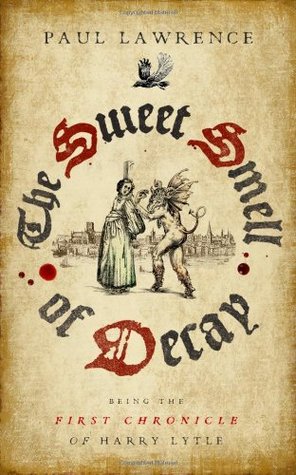
Decay and Disgust in 1664 London -- The Sweet Smell of Decay, a Book Review
Photo: from the book's Goodreads page.
I really liked this book despite its inconsistency. Some parts are very well-written, and some...well, aren't. Very odd. You can get a paragraph or two, or a few pages, with exceptional prose, or description; but then suddenly you get a dead-weight clunker of a paragraph, or sometimes just a line or two. There are shifts in tone, too. Suddenly--and I mean you can hear the screeches--a character becomes shady. Suddenly a scene changes, or you can't see it clearly. Towards the end there's a well-drawn action scene--and then suddenly you're at a trial, and it's very drawn-out. And the main character, Harry Lytle, does this and does that, and seemingly never stops, to do anything, and you realize that can't be, and it all doesn't come together, but it's okay because you're reading about yourself going through the motions as Lytle, and that's enough. In fact, that's the point, and undoubtedly the author's intent.
Very tough to explain.
But despite it all, you have a main character who is likable in his opaqueness. Who is he? What does he do? Not really ever explained, but he's a common enough bloke, and he's supposed to be you, the reader. He's just accessible enough to be us. We're the ones doing what he's doing, seeing what he's seeing. That transition is so seamless, you don't even realize it happened.
1664 London is really the main character, and it is supported well. The mystery isn't really mysterious. (The plot is more of a mystery, if you know what I mean.) It's all explained at the end, not very well, as the bow falls off and isn't neatly tied. But you won't care, because you're there for the sights and sounds of 1664 London, and you will get a lot of that, and you'll like it. The logistics of the ending is a head-scratcher, as are all of the characters when they take off their wigs to check for lice. Everyone's bald, and everything's filthy and gross, and 1664 London is just a disgusting place, where people get hanged but don't die, and their intestines are ripped out and burned and they don't die, and they're then tied hand and foot to horses and ripped apart, and if they still don't die, they're carted in a wheelbarrow to the nearest river and dumped in. And then their heads are stuck on a pike on a bridge or tower. And a prisoner about to die this way soils his pants, and that's described, and you realize that's what you're reading this for--the details, like you're there in 1664 London, and you're happy to be there by reading about it, because you sure as hell wouldn't really want to be there.
That's why this book works. If you like the history of historical fiction more than you like the fiction of historical fiction, you'll like this one. I'm on to the next, A Plague of Sinners.
Labels:
1664,
author,
book,
bridge,
character,
fiction,
goodreads,
happy,
Harry Lytle,
head,
history,
lice,
London,
Paul Lawrence,
plague,
prison,
river,
Sweet Smell of Decay,
tower,
trial
Wednesday, September 10, 2014
Library of America: War of 1812
From the weekly emails I get from the Library of America, here's what I've gleamed from the journal of British soldier George R. Gleig, who assisted in the burning of the White House, the treasury, and the Capitol.
For this entry, we'll focus on what British soldier Gleig wrote about what he saw when he helped burn D.C.
--First, this was not mentioned in either account, but was in the summary: When British Admiral George Cockburn arrived in the city, he searched for the offices of the National Intelligencer, which had long been insulting and taunting him, and oversaw personally the destruction of the pressroom. Spectators overheard him denouncing the publisher “with much of the peculiar slang of the Common Sewer.” The Encyclopedia of the War of 1812 mentions a contemporary report claiming that the admiral instructed soldiers to “take special effort to obliterate all of the c’s in the newspaper’s type racks” so that the publisher could no longer spell Cockburn’s name. Amusing. If the Admiral was that thin-skinned dealing with a foreign newspaper, how could he have been with the papers, politicians and brass in his own country?
From Gleig:
--The inhabitants of D.C. were so sure of victory over the British that they didn't leave the city--until the British troops were actually in it. This includes Madison, the President, too.
--The withdrawal of the President was so quick and last-second that he left a gourmet dinner for 40 still hot on his table, with many bottles of wine open and ready. All of this was enjoyed by the British troops before they torched the White House. "[After speaking to the troops, President Jackson] hurried back to his own house, that he might prepare a feast for the entertainment of his officers, when they should return victorious. For the truth of these details I will not be answerable; but this much I know, that the feast was actually prepared, though, instead of being devoured by
American officers, it went to satisfy the less delicate appetites of a party of English soldiers."
--The British were surprisingly humane. Though they burned the White House, the Capitol and the Treasury (and "a noble library"), they let all of the other houses stand--except the home of the guy who killed the General's horse.
--All of the citizens of D.C. were still there when the troops arrived because Madison had just crossed the only bridge that spanned the Potomac--and immediately ordered it burned: "...the rest were obliged to return, and to trust to the clemency of the victors." Thanks, Mr. President.
--All the National Archives were burned. Can you imagine the historical stuff that must've been in there? Things from the Pilgrims to the Revolutionary War--all lost.
--Greig wrote that the American forces vastly outnumbered his own--but they didn't (or couldn't) fight. He says the American forces should've been successful, no problem, but that the generals and soldiers didn't know what they were doing. Reminds me of the Northern generals defending D.C. in the beginning of the Civil War, just 49 years later.
--The Government section of D.C. was completely destroyed--and the awesome, mile-long wooden bridge, the National Archives, the White House (and all of the historically relevant things in it) and all of the early buildings, all built just 25-30 years before--if that. Devastating.
Labels:
1812,
America,
archives,
bridge,
British,
capitol,
Civil War,
D.C.,
general,
Gleig,
library,
Madison,
national,
Pilgrim,
Potomac,
president,
Revolutionary,
WAR,
Washington,
White House
Wednesday, October 30, 2013
Two Dreams
Photo: Freud's Vienna office, from forpilar.blogspot.com.
Despite being woken up more than six times by my car's alarm that inexplicably went off three times, and by my dog, who whined constantly through the night, I somehow managed to sleep deeply enough to have two very strange dreams.
Dream #1
I'm rooming with another guy, who seemed likeable and reasonable enough, but in the dream I become more and more concerned that he is not a good guy at all. I ask questions and he doesn't answer them. He gets that lean and hungry look, as Shakespeare's Caesar called it. Somehow it becomes clear that he's a murderer, and I come upon a giant folder of files and documents, one of which seems to prove the issue when I pick it up and read it. When I lower it from my eyes, there he is, looking dangerous, obviously about to do something nasty. But before I have the chance to do something about it, either my car alarm goes off in the garage, or my dog whines and wakes me up.
The most surprising thing at all: the dream makes it very clear who this person is: It's Red Sox back-up thirdbaseman Will Middlebrooks. Who, despite striking out way too often, I'm sure is a nice enough guy in real life. That was just weird, man.
Dream #2
It's in the future, not too distant. I work under a bridge that crosses a wide, beautiful river. Things are so bleak in this existence that countless people jump off of this bridge in an attempt to kill themselves. My job is to rescue them from the river, and resuscitate them. I get a bird's-eye view of this bridge (of which I did remember the name, but some time in the last fifteen minutes, I've forgotten it; I hope to remember it by the time I finish typing this, and I can tell you it's a simple name, like the Point Bridge, or something. It's not something famous, like the Golden Gate Bridge, or even something real). It's a long suspension bridge; it's fall, because the leaves are turning color. The river water is very smooth and clear. There are no boats. Everything's serene and peaceful and beautiful.
Except it's not, because people are jumping. I save quite a few people over a short period of time on this day. Maybe a dozen, or more. I don't have a boat to get them. (Maybe there's a gasoline or engine shortage in this future.) But the last person to jump, a tall, full brunette, is different. I can't find her in the water at all. This has never happened before. Never has someone gotten away, or died. But just when I'm about to give up, I see her, and soon she's on the riverbank and I'm trying to force the water out of her lungs. This happens for a very long time, much longer than is useful.
I look at her. I don't know her. She's got a solid enough neck, a pretty face, and soaking wet black hair that trails on the damp ground. Her eyes remain closed (though I know in real life, a dead person's eyes stay open) and, when I stop blowing in her mouth, trying to revive her, that, too, closes.
She's completely still. She's dead. I've lost her. For the first time, I've lost one.
And then the dog's whine wakes me up.
And that's it. Two strange dreams. I never did remember the name of the bridge, but I'll go with the Point Bridge for now, until I remember.
Freudian analysis, anyone?
P.S.--A very hearty thank ye to Ashley Cosgrove, who was kind enough to put a link to a recent Shakespeare entry (the one about how he did not play a part in the 1608-9 publication of his sonnets) on her Facebook page--and without me asking (or even being aware of it, at first); and to Gibson DelGuidice, who was nice enough to recently say very complimentary things about my blog (and to place a link to it) on his blog. And I didn't even know about it, either, until recently. You guys rule.
Tuesday, March 26, 2013
Reading Like A Writer: Story Structure
Photo: The Golden Gate Bridge, in an aerial view, from the bridge's Wikipedia page. Click it; it's a great pic.
I've been trying to read books lately with a writer's eye, so that I could learn what makes successful (defined here as published; maybe also as respected and/or successful writer) writers write successful things. I've had (extremely) modest success recently, and I've been trying to learn why some pieces have sold and why some haven't. Here's what I've come up with recently:
--Stories sell better if they have a structure, and not just a "this happens, then this happens" kind of feel. Readers can feel the flow of the structure; they're pulled along by it. So the story, the characters, the setting--all of that is important, but the flow of the structure is like a double-pull with all of those things. Stories that are just a series of events don't have that flow, and so the reader feels disjointed right away, even if the characters and the plot and that stuff are solid. No structure, no flow, no pull.
--The structure we've all learned in high school--the Shakespearean Plot Triangle--is not the only structure to use. Some stories just won't fit to that form, especially if there's no solid climax in the middle of the piece, or a clear finish for the resolution. And not if the story doesn't break cleanly into five or so different parts. There may not be a clear rise to the climax, or fall from it to the end, especially if the end isn't tragic or definitive. For example, if the ending is more in the Chekhov vein, where you're dropped into the lives of the characters, and they're not done at the end--or even if there really isn't an established end, then the five-part plot triangle won't fit. And you can't make a story fit a structure that it just isn't made to fit. You can't force a structure upon a story.
--A three-part story structure that works for me lately--that I think might work for one of my novel manuscripts that I'd been sort of forcing a five-part structure on--is called the Suspension Bridge structure. It differs greatly from the plot triangle because there's not much building up, nor falling away from, though the ending is usually pretty solid like it would be at the end of the plot triangle.
Picture an actual suspension bridge. It starts at the land's edge, and the bridge's cables swing up to the first apex. This is the build-up of the character, his traits, and his flaws, and the climax, if you will, of the peak there is when he gets something that he wants, that might better his plight. This thing must change the character in a major way--or it has to at least offer the possibility. Usually this involves a change in the character himself; it sets up the character vs. self conflict, though there must be many other conflicts to come. Then the bridge cables drop. And it's a long, long drop, and somewhere there is a rock-bottom, in which the character is threatened with the possibility of going back to where he started, if not worse. This is also where all of the conflicts are established for that thing that he wants and here's where the antagonists are established. This is also where the big reveal of a big conflict happens, something the protagonist might not even know. But then he does. Then the next upswing starts; he overcomes those conflicts somehow and succeeds in some way by the apex of that next upswing. There was such a huge crash before so then, when he succeeds for the next upswing, that apex of that upswing has to be a major victory, much more so than the previous one, and it sort of wraps up the whole story. The space between these two apexes is the vast majority of the story. The last descent is not necessarily a downswing--it just has to establish the normalcy again of this character's new life as the bridge's cables connect to the land again. The dust has settled, and the character's life is a bit more clear, usually in a good way. The ramifications of the victories and successes are shown, and the character again carries on with his life, and both you and the character feel it'll be better.
This structure is much more open for characterization, and is an especially good structure to use if one of the main conflicts is character vs. self. The best example I've noticed recently of this suspension bridge structure is the movie The Verdict, which I mentioned in the recent blog about signs you're growing old: it's the movie I sought, made in 1982, and I sought it because I needed to see it again, because it suddenly hit me, purely from memory, that it was the epitome of the suspension bridge structure.
I'll explain how and why in a blog entry to come.
Subscribe to:
Posts (Atom)

