Showing posts with label write. Show all posts

Thursday, September 7, 2017

Surrender, New York by Caleb Carr


Photo: Hardcover front, from its Wikipedia page

Alternately good, and bad, well-written, and lazy, erudite, and at times pedantic, this book has got to be the most Jekyll-and-Hyde I've ever read. It really almost defies explanation. Some of the writing almost approaches The Alienist, but this book overall is nowhere near that great book, frustrating because it's the same author, and it's obvious that it could go there, but...

The book opens well enough, I guess, but it takes awhile for the crime to show itself. When it does, it's well-written and atmospheric. You won't think of a mobile home quite the same way again. One Goodreads reviewer hated it, but it's well-done. All of the crime scenes are well-written and thoroughly imagined--one of them perhaps a little too much so, involving a baby, a toilet, and a guy who gets shot 46 times. There's overkill there, and it isn't with the 46 shots. The ending is satisfying; in fact, it works better than it has any right to, but it's a case of been there and done that for me, the main character and one of the cops.

So that's all well and good. What wasn't:

--Normally long books don't bother me. I'm okay with long, leisurely strolls of a book, when it's okay that it sometimes takes circuitous paths. Some Stephen King books are like that. Lots of books 1850-1950 were like that. The Alienist and its sequel are a little like that, though they're tight and well-written a helluva lot more often than they're not. But this one is bloated solely because Caleb Carr falls in love, lazily, with his main character, his sidekick, a young boy who joins them, and a cheetah. (Yes.)  Fact is, with a little editing, the locker-room jiving between Dr. Jones and Dr. Li could've been tolerable. But there's no editing, from the publisher, the writer, or from the characters themselves--and they become sophomoric, boring and an absolute trial. Carr was maybe trying for a bit of 48 Hours-like dialogue here, but Jones and Li aren't Nolte and Murphy, and it's an eye-rolling mess. You don't like them together. You don't like how they talk. You wish they'd shut up and grow up and for God's sake shut up again. Curb some of their painful banter that Carr clearly enjoys and you lop off a good 50, 75 maybe 100 pages. After page 475 or so, I began skipping over it and just looking for the plot points.

--You'd think I was a prude when I say that the sheer number of f-bombs (and similar words) defies belief. I mean, there are hundreds of them, perhaps more, in this almost 600 page book. I'm not kidding when I guess that there's at least, on average, one per page. I'm guessing there are about 750 such bombs, and they're said by two doctors and a young kid. There are so many of them that I kept imagining Annie Wilkes's diatribe against lazy swearing in writing. Her speech perfectly fits this book. There are that many, and by God she may have been right. And I was incredibly happy to see that literally every review I read--from Michael Connelly's very favorable review in the New York Times, to other appreciative reviews, to some scathing Goodreads reviews--they all mention the sheer unbelievable number of obscenities. And we all wondered, How could Caleb Carr not hear them? How could he not notice how many there are, and how bad it is?

--The love interest for the almost 40-year old main character is beautiful, blonde--and 20. (Yes.) Need I say more? Carr's descriptions of their interactions and budding romance simply aren't believable.

--Kudos to bringing to the nation's attention the existence of "throwaway children," which in my job I've seen more often than I'd care to remember. But the (bloated, overlong) plot device of a governor, an Assistent D.A. and various other relevant law enforcement and political figures covering it up because they're afraid it'll make them look bad? It's been a problem since the 80s, and it's already made every state look bad. Simply not believable.

--Long, windy novels work when the narration is folksy and believable, or the characters are very likable. Neither is the case here. So it's not a long, leisurely walk. It's a stumble. When you agree to read a long tome, which Carr clearly likes to write, and that's fine, then you're readily sacrificing the time and you're willing to go along with a narrator, wherever he takes you, which you're aware could be all over the place. But, again, the plot has to be agreeably labyrinthine, which this isn't. Or it has to be agreeably written and smooth and light as a feather, which this isn't. Or the main character and his world have to be very likable, or at least very relatable--and they're not. Frankly, all of the reviewers I read agreed that Dr. Jones isn't all that agreeable a guy. This is bad because a) it makes it even more unbelievable that a beautiful 20-year old would fall for him so quickly, and b) because it's obvious that Jones is a stand-in for Carr himself, so in essence we're not agreeably relating to the author as a person. Makes you feel bad.

And so you might be wondering why I rated it 3 out of 5, which means I liked it. I suppose I would've given it 2 1/2, if I could have, and maybe even 2, but overall the promise of it, and of Carr's potential, kept me going, until I couldn't take Jones and Li anymore and I started skimming. I have to admit that I just read the last 125 pages to see who done it, and to see what happens to Ambyr, to be honest with you. Lucas, too, I suppose, though he was too precocious for me. The last half feels like maybe it was mailed in, though the resolution is written much better than the 100 or so pages before it.

So don't be looking for Carr's earlier, better works, like The Alienist, because you won't find it here. Though this was light years better than the one previous to this, an incredibly long, convoluted, badly-written mess about a forgotten culture in the middle of the German forest, and really one of the more clear Did Not Finish I've ever had. That one wasn't a book to be put aside lightly--it was to be thrown with great force. (Apologies to Dorothy Parker.) Anyway, here's to hoping that Carr goes back to the beginning, and really analyzes why Lazlo's books worked, and his latest hasn't.

Saturday, February 27, 2016

March

A book so well-written, it causes envy and jealousy within me. How could I possibly expect to write as well as this? If all published works had to be this well-written, few authors would stand a chance.

I realized while reading this that most of Geraldine Brooks's sentences were detail-in-action. (And certainly not the other way around, which mars many works of good writers.) Her sentences are doing one of two things: they're either description, or they are action. Too much of either one would be boring, even if it's well-written and boring. Therefore most of her sentences are a combination of the two, detail-in-action.

In this, she takes a mostly-absent character from Alcott's Little Women (which, embarrassingly, I have never read, though I have it around here somewhere) and fills in his gaps. Where did March go when he enlisted? What did he do? Well, he did these things.

This book is a masterpiece (and therefore worthy of its Pulitzer) of its time, and of its rendition of the people of its time. Yet like all good works, it makes the reader understand that the people of its time are also the people of this time, and vice-versa. Here you have racism among the Northerners and the Southerners, and neither is treated like a stereotype. And so it is today. March comes home a bitter soldier who has seen and done too much, and who has brought with him a PTSD and a Blakian Experience that will never be undone. And so it is with returning soldiers today.

This is a book of all times, of all wars, of all soldiers and of all victims. Wars in Iraq, Syria, and anywhere else of any time will be similar to Brooks's Civil War rendition here.

The sudden POV shift jarred a little, and the shift back to March disoriented a little (I had to go back  to be sure that it was his turn again), but the reader will see the necessity of the shifts. Brooks could have superficially prepared the reader, perhaps by placing character names at the beginning of each chapter--a la George R. R. Martin in his Song of Ice and Fire books--but such is not her way. You'll be able to bear it and move on.

She does an interesting thing with Grace, who seems to turn up a little bit more coincidentally than maybe she should--but the reader will see the necessity for this as well. Brooks gets away with these two things that would have torpedoed lesser writers (such as myself).

This was a quick, intelligent and gripping read that sounds all too true, and will perhaps leave you a little emotional throughout, and certainly at its end. But you owe it to yourself to read it, if not for the great writing and experience, then perhaps to better understand a returning soldier you happen to know today.

Friday, April 24, 2015

Notes from A Stephen King Interview, Part 1


Photo: Stephen King's house in Bangor, Maine.  From his Wikipedia page.

Stephen King gave this sort of loose interview to The Atlantic on April 12, 2011.  (I don't know why I'm reading it now, four years after the fact.  And...It's not called The Atlantic Monthly anymore?  Was I napping when that happened?)  The interview was in conjunction with a new-at-the-time short story, "Herman Wouk Is Still Alive," which you can read here.  (You should read the story first before continuing on with this blog entry.)

King said a couple of things I thought were interesting, things I didn't always agree with.  So, without further ado...

James Parker: Would you mind filling our readers in just a little bit on the back story to "Herman Wouk Is Still Alive"?

Stephen King: Every year my son Owen and I have a bet on the NCAA March Madness Tournament, and last year the stakes were that the loser would have to write a story [with a title] the winner gave to him. And I lost. Except I really won, because I got this story that I really like. The title that he gave me for the story was "Herman Wouk Is Still Alive," because he'd just a read a piece saying that the guy was still alive and he's still writing even though he's 95 or 96 years old.
So I thought about it a lot--believe me, I thought about it a lot. The tournament was over by the first of April that year, and I mulled that over in my mind until about July. So there was a period of about four months when I thought, "What am I gonna write, what am I gonna write?" Usually you get an idea yourself and then you write a story -- you don't think of a title and then write a story to go with it. So it was kind of an ass-backwards kind of thing. And my first thought was to write a story about a guy in a mental asylum who believed that he was keeping certain writers alive by brainpower. And it was going to be kind of a funny story, and there was going to be a list of writers that he'd gotten tired of and that he had allowed to die.

Belanger: These are the minds of writers.  He started with a title and no story (99.9% of the time it's the other way around) and then had a thought about a mentally unbalanced guy who thought he was keeping writers alive out of his own will.  And when he tires of the writer's stuff--boom, the writer's gone.  Now, that's not normal thinking--on the part of the character and on King himself.  But that is how the minds of writers work.

Stephen King offers another moment of how he gets ideas for his writing:

The other day I went out to the mailbox at the end of the road and there was a flyer in there, one of these things where they give you coupons and you get a dollar off mouthwash or makeup or whatever, and on the back there's a number of pictures of children, missing children. It says: "Have you seen me?" It's just a sort of throwaway -- you get it and you don't really look at it. And I was looking at it on the walk back from the mailbox, and I thought: "What if there was a guy who got one of these and one of the pictures started to talk to him and say 'I was killed and I'm buried here in this location or that location, in a gravel pit or stuffed into a culvert ...'"? And I thought: "You know, a guy like that, who could find bodies, would be under a lot of suspicion from the police. And there's a story there.

Now, that's messed up.  But, interesting, right?  I mean, that's not a bad story idea, right there.  But it's still messed up.  King always calls such moments his "What If?" moments.

I've had these moments.  Not to the same degree, of course.  (Or to the same benefit.)  But these are indeed very cool moments.

Writers speak differently, too, because they think differently--and, hopefully, we've all learned to think before we speak.  Here's what he said about having too many good story ideas at once:

In the old days, it would seem like ideas were crammed in like people in an elevator. And my head was sometimes a very noisy place to be.

Now that's a great comparison!  I'm going to bet that your average intelligent person (the question of whether the average person is intelligent is a different conversation) wouldn't be able to have that thought or explain it in quite that way.  And, by the way, he's right: This is exactly how that feels.  To this I would add the extended metaphor that, when the small elevator gets too crowded with ideas, the elevator gets stuck between floors.  At least, mine does.  They're all so busy pushing and jostling everyone aside to get to the front, closer to the doors, that nobody ever presses any buttons, and the damn elevator can't move.

And what happens when all these ideas come at you, but you're busy working on something that's going very well?

The other thing that happens with that is, say you're working on something and it's going along pretty well, and two or three ideas occur, and they're all yelling "You should write this! You should write this!" It's almost like being married and all of a sudden your life is full of beautiful women. You have to stay faithful to what you're working on. But it can be uncomfortable.

Again, just not a thought, comparison, or verbal explanation that most people would have.  And, again, he's perfectly right.  My problem is that I've "cheated" and, sometimes, I've just run away from all of them, because there was just too many.  This is why novels take years and years...

To be continued, in another blog entry, in a couple of days...

Saturday, February 28, 2015

Night Shift by Stephen King


Photo: First edition hardcover, from the book's Wikipedia site.


Very successful collection of short stories that spawned some (really bad) movies.  I'd read this book as a much younger guy, but had forgotten most of the stories, so I went back to it and appreciated it all over again.  I've lost somewhere my original copy--the one shown here--and so I've had to make do with the "Children of the Corn," movie tie-in version I have here now.  Somebody, probably me, had switched copies over the years, and I can't tell you why.  Odd.  And I want the original one back.

The ones I remembered from (literally) my youth were: "The Last Rung on the Ladder" (still my favorite here), "Jerusalem's Lot," "Graveyard Shift," "Strawberry Spring," "The Bogeyman," "Gray Matter," and, because of the incredibly bad movies, "Children of the Corn" and "Lawnmower Man."

"The Last Rung on the Ladder" and "The Woman in the Room" work especially well because there's nothing supernatural in them.  Both stories--especially the former--read well because they are of the "Nothing's More Scary than Real Life" genre--which should be a genre if it isn't.

All of the stories are either good or very good, but I was pleased to discover a couple more.  "One for the Road" works really well, and is one of the scarier ones here.  If "Jerusalem's Lot" was originally a chapter in Salem's Lot--I think I got this right from King, who said it opened his book and was taken out just like Stoker's "Dracula's Guest" opened up Dracula and was taken out--then "One for the Road" takes place after Salem's Lot ends.  It's mentioned in the story that Ben Mears had burned the town down.  I would've put this story last in the collection, rather than second-to-last.  "Jerusalem's Lot" opens it up, so it would've been nice book-ending to have "One for the Road" end it.  Or perhaps that's too-slick serendipity, like the similar paths taken by Stoker's and King's vampire stories.

"One for the Road," "Strawberry Spring" and "The Last Rung on the Ladder" are the best-written stories here.  Almost all of these stories, by the way, were originally published in Cavalier magazine, a now-defunct magazine of a certain sort, if you know what I mean.  I wonder what men of the 70s made out of these well-written, and sometimes philosophically-bent, ruminations next to those explicitly explicit pictures of...well, you know.  It'd be a little jolting, I'd imagine.  He also got paid a few hundred bucks, per story, by that magazine, which is really good money for short stories, especially in the 70s.  My guess is that the magazine was trying to become the next glossy picture and literary high-end magazine of one of its bunny-themed competitors, and failing miserably.  (That bunny magazine, by the way, still pays a few thousand dollars for a short story, and always has.  So the lie could also be "I was reading the stories!" instead of "I buy it for the articles!")

Anyway, what I've learned here is that King has an idea and he writes it.  The simplicity of that is sort of shocking to me.  So here we have a story about a possessed laundry-pressing machine; a story about monstrous and blind rats; a story about trucks taking over the world; a story of a company that hurts those you love to help you quit smoking; a story about a hitman done in by the toys sent by the mother of his latest victim...and they all work, in varying degrees.

Think it, write it; think it, write it; think it, write it.  And why not?

Tuesday, January 20, 2015

A Feast for Crows by George R. R. Martin


Photo: The book's hardcover edition, from its Wikipedia page.

A gripping continuation of the saga, and--if possible--a bit more  gritty and ghoulish than its predecessors.  (The title refers to the incredible number of mutilated and rotting bodies laying and hanging and floating all over the land.)  But it still envelops you in its web of world-building.
 
Martin continues to embed us in this world, and does so here by focusing more on some of the more minor characters of the other books, as well as a couple of new ones, while also furthering the paths of Cersei, Jaime, Sam, Sansa and Arya.  Brienne of Tarth gets a larger stage than ever before, as does Sandor Clegane, who she killed in the show, but not yet (if at all) in the books.  He reappears with a woman (maybe) under a grey cloak, who may, or may not, be a character somehow brought back from the dead.  You'll have to decide, but I have my doubts--though, in truth, I don't really know what I'm doubting.

Sansa and Arya hide under assumed names--names that they take to heart a bit too much for me at first, to the extent that the chapters are entitled with their adopted names, to the amazement and confusion of all.  The girls even call themselves these fake names in their thoughts, which got to be a little creepy.  You get used to it, but they became just a smidge too Sybil for me.  And it was a little jarring, and a tiny bit confusing, what with all the names already for the reader to deal with.  But I stayed the course.

Gone from the narrative are Tyrien, Jon Snow, and Stannis.  They're around, just not in the book.  The same cannot be said for the Onion Knight, Stannis's Hand (or, for that matter, for Jaime's hand; sorry), who apparently gets killed off-, off-, off-stage.  Just a quick quip from one of the characters--easy to miss in these 900+ pages.  But characters have the tendency to not die, and not just like Beric Dondarrion, who has died, and not, six times now.  But characters also tend to just re-appear, not dead, though other characters, and sometimes the reader, thought they were.  So, again, I have my doubts.

Speaking of Beric Dondarrion, I had to look up his last name to finish one of the sentences above.  I don't mind telling you, there's a large city of names being thrown at you by now in this series, so if you find yourself pausing for a moment after reading about a character, and thinking, "Wait.  Who the hell is this again?", don't feel bad.  What can you expect with literally dozens of names, and two newly fake names, and a handful of new characters, all being thrown at you at the same time?  Don't stop reading because you forgot, for example, Beric's last name.  Keep with it.

The reader will be rewarded at the end, if the reader, like me, was wondering how one of the characters could get away with so much for so long.  Maybe the tide has turned on that.  Speaking of the tides, there's a new group of people to deal with who pray to the god of the sea, a religion founded on the baptismal drowning of its believers.  Sort of.  Anyway, they need a new king, and they get one, kind of.  This takes a long time to happen, and is a bit interesting, and a bit not, at the same time.  This is perhaps my only complaint here.

But the 900+ pages whisked by--no small feat, that.  The book is good enough to throw all this at you, which would be annoying from most books and book series, but is not here.  It has now become addicting, to the extent that I find myself occasionally thinking and speaking like its characters.  I don't look forward to seeing something now, for example.  Now I yearn to set my eyes upon it.  It's become such an addiction that I was dismayed to find that I do not have the fifth in the series, A Dance with Dragons.  I'll have to pick it up soon, once the temps warm up enough outside so that I don't have to worry about my breathe immediately freezing and falling like dead weight upon my foot.  (It's one degree out right now, with a -20 wind chill.  It's so cold I'm losing a fortune in heating, but I'm so glad to be comfy and warm that I don't care.)

Perfect weather for this book, as it's often cold and wet and miserable for all its characters, internally and externally.  Makes me want to drink some warm or hot wine, or maybe some dreamwine, and build a fire until the wind and cold subside.  See?  You get engrossed in that world.  Or, maybe I've read too much and not slept enough.

Tuesday, January 13, 2015

Game of Thrones -- A Storm of Swords by George R. R. Martin


Photo: U.S. hardcover, from the book's Wikipedia page

Unbelievably entertaining and engrossing read, which--as I pointed out in my review of its predecessor--is really saying something, since I knew every major thing that was going to happen.  That in no way took away from the read, and may even have enhanced it.

As is necessary for high fantasy, and perhaps fantasy in general, the writing is so totally enveloping that it is like you're in that world.  World-building has to be perfect in books like this, but I'll bet that it's rarely this much so.  The Lord of the Rings books were less world-built than are these; I don't mean that as a negative towards Tolkien, as he paved the road and showed the way.  But Martin doesn't focus on over-description of grasses and trees.  Instead his writing is completely focused on completeness in every way: how everything looks, smells, etc., just as you're taught in writing classes, though not to this extent.  He doesn't just description from all of the senses: he focuses more on the sight and the sound, and less on the others.  And he does not describe to the detriment of the action, as Tolkien did.

Some scenes are better in the show, but to describe how and why would be to partly ruin the experience of reading the book, or watching the show.  So just a quick mention of what things are different, without mentioning how they're different:

--though the end of this book brings you up-to-date with this past season's end, the book ends with something not yet seen on the show.

--Brienne of Tarth does not do in the Hound.  I prefer the book's way.  It struck me as unrealistic that Brienne would run across Arya and the Hound, way out in the middle of nowhere, on an outcropping.

--Ygritte does not get killed by a little boy shooting an arrow.  I prefer the show's way, though I admit the book's way is much more realistic.  Martin does not go for the melodrama.

--Something major happens to Jon Snow on the Wall in the book and not in the show.  At least not yet.

--Littlefinger's dialogue before his push is much better in the show.  Essentially the same in both, but the show just nails it so much better.

--(Martin is better than the show's writers with the overall dialogue, and the everyday expressions, etc.  But at a climactic moment, the show's writers really nail it.  And this isn't because I saw it before I read it.  Trust me.)

--The book emphasizes how many guys Cersei sleeps with.  It's clearly a weapon for her.  The show does not...well, show this.

--The book makes it very clear who killed Joffrey.  Good to know I got it right from the show.  We know from the show that Littlefinger was behind the whole thing (which I wouldn't have figured out), but who exactly put the poison in the cup?  Oops...You did know it was the wine and not the cake, right?

--The book breaks the battle of the Wall into two or three distinct parts, over a few days.  The show gives it to us all at once, all in one episode.  I like the show's take better.

--The book does not show the giant's attack in the tunnel like the show does.  It was a good call of the show's to do so.

And there's more, but you get the idea.  I realized while reading that the show made some excellent decisions about what to emphasize (the scene between Tywin and Tyrien was better in the show, too, as is Tyrien's dialogue at that climactic moment) and what not to.  It is a rare thing that a show is better than its material, but it's a close call here.

But that's not why you should read the book.  The writing does something that the show, no matter how hard (or successfully) it tries, cannot duplicate: it envelops you into its world-building so completely that even a visual medium cannot match.

P.S.--This was the last book I read in 2014.  It was my 25th, for a total of 10,283 pages.  About 27% of those pages were just the three Game of Thrones books I read.

Thursday, January 1, 2015

Do Not Write Like This!!! A List of Tired Plots.


Photo: One of the banners from www.strangehorizons.com.


This is a partial list of plot elements seen way too often in the business, from Strange Horizons, an online speculative fiction magazine.  Click the link to see the whole list, which I'll blog in partials.  (Strange Horizons allows this list to be published, in case you were wondering about copyrights.) 

After every story of this genre I write, I check out this list (of 51 things, most of them sub-headed, which will, as I said, be blogged about later as separate blog entries) and make sure that none of my stories in any way comes close to matching any of these.  You would think that this would be difficult, right?  Surely there's something in my story that has to match one of these.  Actually, no.  And stop calling me Shirley.  Sorry.  Anyway, upon a close inspection, I see that time and again, my stories do not match any of these main plot elements.  This doesn't mean my story is any good, of course, but it at least means that it won't get rejected solely for being one of these things.

If you've read as much of this genre as I have, or if you've watched as many movies or shows in this genre as I have, a few of these may remind you of one of the stories, books, shows or movies that you already think of as one of the worst you've ever come across.  I've read a lot of amateurish stuff--much of it self-published--that fit quite a few of these.  And they were all very, very bad.

And so I offer these to you, should you ever want to write and publish in this genre.  How many of them do you recognize in something truly awful?  (Not that you would ever do this, but comparisons to my published writing will earn an immediate delete when I moderate the comments!)

P.S.--2a sounds familiar, especially in lots of Stephen King's works, but I would argue that it's not the main plot element.  Jack Torrance in The Shining, for example, definitely has writer's block, but it's due to the evil of the Overlook messing with him, plus a healthy dose of the recovering man's blues.  Besides that, he was able to type "All work and no play makes Jack a dull boy" several thousands of times, sometimes in poetic form.

  1. Person is (metaphorically) at point A, wants to be at point B. Looks at point B, says "I want to be at point B." Walks to point B, encountering no meaningful obstacles or difficulties. The end. (A.k.a. the linear plot.)
  2. Creative person is having trouble creating.
    1. Writer has writer's block.
    2. Painter can't seem to paint anything good.
    3. Sculptor can't seem to sculpt anything good.
    4. Creative person's work is reviled by critics who don't understand how brilliant it is.
    5. Creative person meets a muse (either one of the nine classical Muses or a more individual muse) and interacts with them, usually by keeping them captive.
  3. Visitor to alien planet ignores information about local rules, inadvertantly violates them, is punished.
    1. New diplomat arrives on alien planet, ignores anthropologist's attempts to explain local rules, is punished.
  4. Weird things happen, but it turns out they're not real.
    1. In the end, it turns out it was all a dream.
    2. In the end, it turns out it was all in virtual reality.
    3. In the end, it turns out the protagonist is insane.
    4. In the end, it turns out the protagonist is writing a novel and the events we've seen are part of the novel.
  5. An AI gets loose on the Net, but the author doesn't have a clear concept of what it means for software to be "loose on the Net." (For example, the computer it was on may not be connected to the Net.)
  6. Technology and/or modern life turn out to be soulless.
    1. Office life turns out to be soul-deadening, literally or metaphorically.
    2. All technology is shown to be soulless; in contrast, anything "natural" is by definition good. For example, living in a weather-controlled environment is bad, because it's artificial, while dying of pneumonia is good, because it's natural.
    3. The future is utopian and is considered by some or many to be perfect, but perfection turns out to be boring and stagnant and soul-deadening; it turns out that only through imperfection, pain, misery, and nature can life actually be good.
    4. In the future, all learning is soulless and electronic, until kid is exposed to ancient wisdom in the form of a book.
    5. In the future, everything is soulless and electronic, until protagonist (usually a kid) is exposed to ancient wisdom in the form of a wise old person who's lived a non-electronic life.
  7. Protagonist is a bad person. [We don't object to this in a story; we merely object to it being the main point of the plot.]
    1. Bad person is told they'll get the reward that they "deserve," which ends up being something bad.
    2. Terrorists (especially Osama bin Laden) discover that horrible things happen to them in the afterlife (or otherwise get their comeuppance).
    3. Protagonist is portrayed as really awful, but that portrayal is merely a setup for the ending, in which they see the error of their ways and are redeemed. (But reading about the awfulness is so awful that we never get to the end to see the redemption.)
  8. A place is described, with no plot or characters.
  9. A "surprise" twist ending occurs. [Note that we do like endings that we didn't expect, as long as they derive naturally from character action. But note, too, that we've seen a lot of twist endings, and we find most of them to be pretty predictable, even the ones not on this list.]
    1. The characters' actions are described in a way meant to fool the reader into thinking they're humans, but in the end it turns out they're not humans, as would have been obvious to anyone looking at them.
    2. Creatures are described as "vermin" or "pests" or "monsters," but in the end it turns out they're humans.
    3. The author conceals some essential piece of information from the reader that would be obvious if the reader were present at the scene, and then suddenly reveals that information at the end of the story. [This can be done well, but rarely is.]
    4. Person is floating in a formless void; in the end, they're born.
    5. Person uses time travel to achieve some particular result, but in the end something unexpected happens that thwarts their plan.
    6. The main point of the story is for the author to metaphorically tell the reader, "Ha, ha, I tricked you! You thought one thing was going on, but it was really something else! You sure are dumb!"
    7. A mysteriously-named Event is about to happen ("Today was the day Jimmy would have to report for The Procedure"), but the nature of the Event isn't revealed until the end of the story, when it turns out to involve death or other unpleasantness. [Several classic sf stories use this approach, which is one reason we're tired of seeing it. Another reason is that we can usually guess the twist well ahead of time, which makes the mysteriousness annoying.]
    8. In the future, an official government permit is required in order to do some particular ordinary thing, but the specific thing a permit is required for isn't (usually) revealed until the end of the story.
    9. Characters speculate (usually jokingly): "What if X were true of the universe?" (For example: "What if the universe is a simulation?") At the end, something happens that implies that X is true.
    10. Characters in the story (usually in the far future and/or on an alien planet) use phrases that are phonetic respellings or variations of modern English words or phrases, such as "Hyoo Manz" or "Pleja Legions," which the reader isn't intended to notice; in the end, a surprise twist reveals that there's a connection to 20th/21st-century English speakers.
  10. Someone calls technical support; wacky hijinx ensue.
    1. Someone calls technical support for a magical item.
    2. Someone calls technical support for a piece of advanced technology.
    3. The title of the story is 1-800-SOMETHING-CUTE.

Thursday, October 2, 2014

Phantom--Book Review


Photo: Jo Nesbo, from crimefictionlover.com.

This one took a little while to get going, but of course was well worth it.  Harry Hole is back from self-isolation in Hong Kong because the son of the love of his life has been accused of murder.  Helping Hole to hopefully set this boy free are his usual suspects, though they're mostly given short shrift here.  They pop up essentially to help out and then they disappear again.  I would've liked to have seen Beate some more, but I admit that there wasn't enough in the plot to place her there more often without making it look forced.  So...maybe later.

At any rate, the crime itself again isn't a mindbender.  An experienced reader will know who done it, though, again, the proof is hard to come by.  Watching Hole figuring it out and gathering it is why we read these.  But it shouldn't surprise you.  Also not much of a mystery to me was the identity of the old man who keeps showing up.  It probably won't be for you, either.  The italics portions struck me as unnecessary, but it was different for Nesbo, and so maybe that's what he was looking for.  It also provides a decent book-ending to it all, so okay.  I guess.

What will be a surprise, however, is the ending.  Rather infamous now, as this review comes a few years too late for the surprise ending, and since the tenth book, Police, has been out for awhile now.  If you haven't read this one, I won't spoil it for you, but...yeah, there's been a sequel, so...

And, yeah, I know I'm reading the Harry Hole books out of order.  I don't have them all, so bear with me.

The best part of these books, to me, is the honesty in which Nesbo writes them.  He doesn't shy away from the depressing, bottom-line truth of things.  The ending of Phantom is yet another, and perhaps the most glaring, example.  I had that part figured out because that is the way of these types of things, as Nesbo shows time and time again in this book.  It really couldn't have been anyone else, for any other reason, at the end.  Mattress Girl, in my soon-to-be-finished ms., can attest to that.  It is what it is.  Let's deal with the what-is before we try to make it the way we want it to be.

Friday, July 11, 2014

The View from the Bridge by Nicholas Meyer--Book Review


Photo: Cover art of the book, from trekmovie.com

A very interesting book, more about writing and directing in Hollywood than about just Star Trek.  Having said that, it would help mightily to be a fan of the series.  It's not that you have to be a fan to enjoy it; it's that Star Trek, in some way, takes up probably 50% to 75% of the book.

Still, there are other interesting things here:

--It takes about two seconds for directors to become nobodies in Hollywood.  I thought it was fast for actors...

--If you're not going to act, you'd better be able to write.  And fast.

--Meyer culled five or six screenplay drafts of Star Trek II and wrote Wrath of Khan by combining the best elements of those unfilmed drafts, plus his own ideas.

--And he wrote the screenplay for free. 

--In twelve days. 

--And didn't take a screenplay credit for it.

--I watched Wrath of Khan again last week, after finishing this book.  It holds up surprisingly well.

--He insists those are Montalban's real pecs.  Says so repeatedly.  I still don't believe it.

--And there's no way a genius like Khan doesn't get the twice-repeated "If we go by the book" coded message from Spock to Kirk near the end.

--The latest Star Trek movie is, of course, a parallel-universe version of this.  Abrams clearly liked Wrath of Khan and honors it constantly in his film.

--Which is in some ways better.  But mostly I don't think one is better than the other.  Just...different.  Each couldn't have been made in their respective eras.

--(Back to the book.  Sorry for the digression.)

--Nicholas Meyer somehow survived very successfully in Hollywood despite very powerful depressive and neurotic tendencies.  By his own frequent admission.

--He says the Trek movies he wrote and wrote / directed (II, IV and VI) were the best ones.  He is, of course, correct.  One had its moments; III was okay but too predictable and violent; and V was just plain awful.

--His first novel, one that made Sherlock Holmes meet Freud, was very good.  I haven't read his others, but plan to.  His books overall have done pretty well, especially his Holmes.

It's an easy read.  If you're a fan of movies, writing, Hollywood, and / or Star Trek, give it a shot.

Monday, March 10, 2014

Blog Tour--My Writing Process

Thanks to my friend Jane Wilson, I am participating in the Blog Tour, in which authors write about their writing process, and their writing, by answering the same four questions. Jane posted hers last week, March 3rd, at http://redroom.com/member/jane-wilson. Go check it out. And thanks, Jane, for asking me to blog my two cents' worth.

So, if you're silly curious enough to read four questions and answers about my writing process and my writing, here you go:

1. What am I working on?

My goodness, what am I not working on? I'm always working on multiple projects, which I used to think meant that I was super-creative. But now I think it means I'm not as focused and organized with my time and with my projects as I should be. I'd get more writing finished if I did one thing at a time. For the record, I do not encourage the multiple-project method, unless you are much more organized than I am, and you tend to finish a piece after a decent length of time.

Anyway, I'm finishing a thriller / mystery, titled (maybe), Mattress Girl, though I may stick with its (too) old title, Cursing the Darkness. (I'm sort of sick of that title now, but it fits the work very, very well. And Mattress Girl is not the main character.) Feel free to comment on which title you think sounds more interesting. This is maybe 80% done. A sequel (or prequel) is in minor stages as well. 

I'm also writing a short story, "Cribbage," about a father / son bonding memory, considered by the narrator after his father has passed. This has proven to be a little too close to home, and difficult to finish. 

I'm also working on a historical horror novel about a nasty, evil creature that took part in the plague in Rome and the Great Fire; in The Black Plague that killed a third of Europe (though I focus on the village of Eyam, England, which quarantined itself during the Plague and lost about 80% of its people); in the TB epidemic in New England from 1880-1895; and possibly in the Spanish Flu Epidemic of 1918 and, if I'm really gutsy, in the AIDS Epidemic, circa early-to-mid 1980s. (Because that's what it was, and is, and I'm not sure, even 34 years later, that we've totally realized that as a society.) I'm actually about a third through this one, though it's in fragments. I speak of Book 1 of this project, which I expect to be a trilogy, at least. 

And did I mention I was drafting a novel told from the POV of the maid (who really existed) or of a servant (who really didn't) of Lizzie Borden, in 1892? And two memoirs?

I also write book reviews for an online mystery magazine. You can see why I do not suggest this juggling-writing method.

2. How does my work differ from others of its genre?

I try to turn each genre on its head, or to at least introduce something new to it. I'm writing Cursing the Darkness because I've been reading mystery, and noir, and detective novels, and combinations of those, since my early teens. The darkness, the loneliness, the lone man standing on his own (but not being as alone as he thinks he is) against the evils and ills of his society, of his world--all of that resonates with me. I feel I often do much the same thing, though I'm not a detective. I suspect, though, that I could be a good one, but I wouldn't be able to work in a constrictive environment, like a police force. I wouldn't be able to stand the politics, the red tape, looking in the faces of murderers and abusers and rapists and not being able to beat the hell out of them, the frustration of having to let go of an unsolved case because of the next case...

The memoirs I write because I have something very specific to say in them; to be honest, they're in such an infancy that I don't know how they'll be different yet. Except for its main subject, of course...

The short story in general is a form I like a lot. It's immediately gratifying for the author, in the sense that they're finished faster than a novel, and the editor's Yes or No comes back quicker than an agent's or publisher's does. Mine are different, I think, because I focus on an aspect of the story's genre, or themes, that are not as tread upon as are others. "Hide the Weird," for example, differed because it focused on the minute details of one potential death, one incident, and it ended with a "knowing" detail that was a little different, a little quirky. I like that about short stories, that you can focus on one thing, and turn it around, or amplify it...

The historical horror novel will be different because it takes a bit of the vampire trope (though it's not exactly a vampire, per se) and focuses more on the European vampire myths rather than the American neck-biter. (There's no neck-biting, for example.) These bad dudes are quite nasty because they're more life-drainers and spirit-suckers, like the original European and Asian ones were. They are not Victorian blood-sucking stand-ins for repressed sexual urges--if I can be so bold. And these are not things you'd want to have a romance with! No one gets lovey-dovey about these guys. It's not even an option. These are things you want to run away from, fast--if you can. That's difficult because they tend to hide in the footsteps of bigger catastrophes--like fires, and plagues, and viruses. But they also hide in the biases of the society's reaction towards these catastrophes--and that's another way this trilogy is different. How can you run from such a thing in Eyam, England, during the Plague, when the town's already quarantined? While people in New England in the 1880s and 1890s, for example, were dropping from consumption, a few unfortunate folks were succumbing to this demonic thing--which hid in the footsteps of the TB, and its way to kill even mirrored TB's symptoms. So that's different, too.

3. Why do I write what I do?

Whoops--I kind of answered that in the paragraph above. Though, actually, the real answer for this is because it interests me. A lot. I've got something to say, something to show, and I know I can do so in a different way than what's already been done--at all, or recently, or both. My characters tend to surprise me, which is always good, and I tend to surprise myself. I write some things and I think--Wow! I didn't know I was going to go there! I'm rarely in love with what I write, but it's a blessing when something comes out just right, and a little bit different. "So Many Reasons to Celebrate the Season" worked like that. Didn't even know it was going to come out that way, and say what it said, until it did. "Hide the Weird" was a little more planned in my head, but the ending was still a nice little twist / surprise for me. And so that's why I write what I do as well--to surprise myself, to complete something of my own unique creation that really works. It's like a mechanic making his own engine and liking how it purrs. It's rare for me, but it's blissful when it happens.

4. How does your writing process work?

Oh, Lord. Well, here's the nasty, evil truth, and I'm very ashamed to admit this, but...I don't have a writing process. At all. I don't write the same thing every day, or even consistently. I don't write at the same time every day, or even (what I feel is) consistently. I don't outline. I do listen to music, and I do draft. A lot. When I can. Whenever my job doesn't consume me; whenever I conquer my own fear, or frustration, or lack of focus, or whatever it is (Steven Pressfield calls it Resistance, which is as good a name for it as any) that prohibits me from sitting my butt down and working on one project consistently, at the same time every day, until it's done. This is maddening beyond belief; I would literally tear my hair out if I thought I could afford to lose any more of it. I do not advise my working method, if I can even call it that, for anybody. Sit your butt down and work on one thing (or one big thing and one smaller thing) at one time. Otherwise it'll all paralyze you like it often does me. It is a minor miracle that I've gotten as many projects done as I have, and that I've been published as often as I have. Every finished piece is a miracle baby--even the ones that don't sell. I'm proud of them all, in some way. They're all a piece of me, and they all came out hard.

Well, that's it. Thanks for stopping by! Next week, please check out the writing processes of these three good writers:

Wednesday, February 5, 2014

For the Love of Books

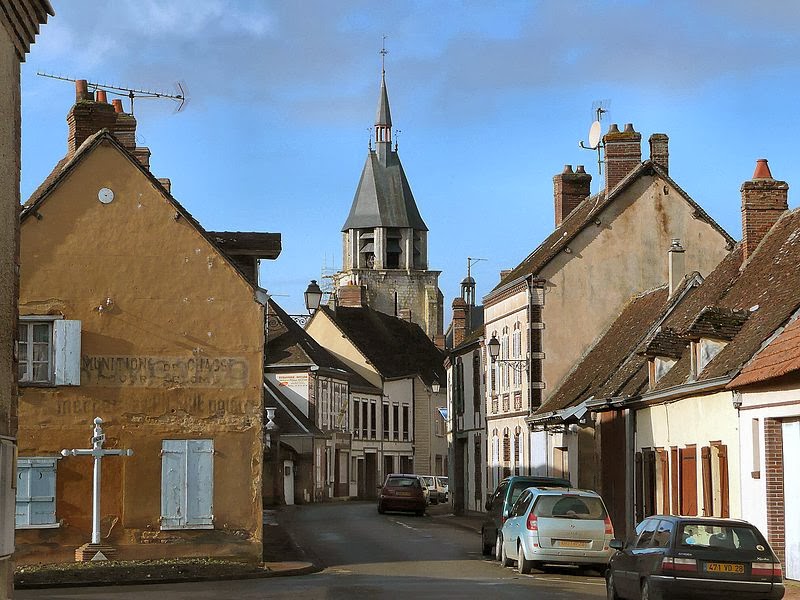
Photo: Illiers-Cambray, setting of the first (of seven) novels that make up Proust's Remembrance of Things Past (or, In Search of Lost Time), from the book's Wikipedia page.

The premise of this book: The editor, Ronald B. Shwartz, sent a message to 115 authors, asking them to respond via letter or phone.  His prompt: "Identify those 3-6 books that have in some way influenced or affected you most deeply, 'spoken to' you the loudest, and explain why--in personal terms.  All books, whether 'Great Books' or not-so-great books--books of any kind, genre, period--are fair game."

Many greats--in literature, the arts, the sciences--responded.  Kurt Vonnegut's was the most memorable to me, but here also are Russell Banks, Dave Barry, Art Buchwald, Jonathan Harr, John Hawkes, John Irving, Susanna Kaysen, W.P. Kinsella, Caroline Knapp, Elmore Leonard, Doris Lessing, Norman Mailer, Frank McCourt, Arthur Miller, Joyce Carol Oates, Grace Paley, Robert B. Parker, Robert Pirsig, Mario Puzo, Neil Simon, Oliver Stone (Did anyone know that he published a novel awhile ago?  Has anyone read it?), William Styron, Gay Talese, John Updike, and Geoffrey and Tobias Wolff--just to name a few.

Which titles were mentioned the most?

Surprisingly--to me, anyway--the title mentioned the most, by far, was Marcel Proust's Remembrance of Things Past.  It was not close.

The others, in order:

Moby-Dick by Herman Mellville
The Bible
The Brothers Karamazov by Leo Tolstoy (or Tolstoi, which I prefer, as a T206 fanatic)
Ulysses by James Joyce
War and Peace by Leo Tolstoi
The Catcher in the Rye by J.D. Salinger
William Shakespeare's Collected Works
The Adventures of Huckleberry Finn by Mark Twain


Most of the selections were idiosyncratic, but there were still a few Hemingways, Austins, and others in there.  Most books we've heard of before were mentioned two or three times.  Those in the list above were mentioned at least six times, at most ten times.

But it was an interesting read, and not very taxing.  It didn't take a lot out of me, which is good, since I've had a headache to drive me insane for the past week or so.

Highly recommended, if you're curious at all about what made an impression on these writers--and why.

I thought it might be interesting to pretend that I am relevant enough to get asked this as well, and so that'll be a blog entry to come.  When I post it, please feel free to write your own list of 3-6 books--and the Why, if you're so inclined.  Do so here, below, if you wish.

Saturday, November 23, 2013

Approximate Word Count

To compel myself to write more consistently, I created a blog (see title) so that I had to post my word count every day. Therefore, hopefully, I have to write every day, in order to have words to count. Please feel free to do the same by placing a comment.  Let's all produce writing together.

The site is http://steveswordcount.blogspot.com/  It's listed at the top of this site as well.

May we all write well, and often.

Saturday, October 26, 2013

Book Review: Soul of the Age: A Biography of the Mind of William Shakespeare by Jonathan Bate


Photo: Book's cover (and the Chiandros portrait) from mathomhouse.typepad.com.

Mostly-fascinating collection of essays, thoughts, theories and placing-you-there Elizabethan history that attempts to understand nothing less than the very mind of Shakespeare, as a man of his time, and--as Ben Jonson famously wrote--as a man "not of an age, but for all time."  Besides a couple of chapters about the politics and religion of his time that I found a bit too dry, the book succeeds at doing so.  It is at its best when it sticks to the literary and theatrical stuff: his plays, his theatres and the people he knew.  If anyone doubts the existence of a non-university man who got a woman eight years his elder pregnant, married her, and left them behind to find his glory and future in the theatres of London, England, let them read this, and they will doubt no more.

This book brings Shakespeare to life like few things I have read.  Michael Wood's book and a couple of others are just as good, in different ways.  And they all delve into the man and his time using their own conceits.  The conceit of this one is to break the book down into sections that correspond to Shakespeare's famous "Seven Stages of Man" speech from As You Like It.  (This is the one that begins with the even-more-famous line, "All the world's a stage.")  And so Bate chronicles the life of and mind of Shakespeare by breaking his life up into the seven parts that we all supposedly share.  I got the feeling that Bate had much of the book written already, via separate speeches and chapters, and tied them all together with the conceit of the seven stages, but whatever.  It doesn't matter, because it works.

The narrative is at its best when it brings us pell-mell into Elizabethan England.  We see it as Shakespeare may have, and we witness things, and become aware of city-wide and nation-wide news that he would have been aware of.  We meet the Burbages, and Heminges, and Condell, and the theatre and publishing climates of the time.  We see him as one of the many in these realms, and as one in the businesses he was in.  He is placed firmly in his time, and yet the book works well also when it shows him to be a chronicler of his time.  Shakespeare is renowned as being perhaps not just the best writer of our times, but also as the best mirror to his own time, without blocking the visage with his own image.  He is within his world, and yet surprisingly intellectually and philosophically detached from it, so he can show it to us, and paint a picture of our human nature, and yet not include his own views and preferences in it--all at the same time.

In short, we know what Hamlet thinks--but we never know what Shakespeare thinks.  Of course, no writer is his character, and no character is its author.  We know all of one, and very little about the internalization of the other.

But Bate's book gets us closer to it than perhaps anything I've read before.  The best compliment I'd give to this book is that it shows you something different about Shakespeare and his England, even if you thought you'd read it all before, like I have.  If you enjoy that kind of literary history, and a biography of him (a little) and of his time, and of his place in his time (a lot of that), then you'll enjoy this.

Saturday, October 5, 2013

Movie Review: Gravity


Photo: The movie's poster, from its Wikipedia page.  Read that, too.  Interesting stuff.

Other than the incredibly obnoxious idiots talking and exclaiming behind me all through the movie, I have nothing but superlatives to say about the movie Gravity.  (Admittedly, the chatty a--holes behind me were not the fault of the movie.)  It is a very short masterpiece, a (mostly) one-woman show, a visual monologue.  Think a much-shorter, female version of Castaway, except in space, and you've got it.  Gravity, in fact, is a much better movie than Castaway--especially since they both shoot for the same themes: lust for life; appreciation; survival.

This review has to be much shorter than my usual, because to write too much about the movie will give too much away.  The special effects are great, as they must be since over 99% of the movie is in space.  The direction is super, as Cuaron seemlessly goes from a third-person POV, to a first person limited POV, to a POV from inside one of their space helmets, to...you get the idea.  This is something agents and editors tell writers not to do, and it's pretty jarring usually when a director does it as well.  Here it isn't.  The timing is just right.

You'll be impressed by Sandra Bullock's performance here, too.  In a way, it's an uber-spunky version of Speed, but without the excessive cuteness she had at that age.  That's gone, but what's left over is a movie-appropriate, gritty self-determinism that I was surprised she could pull off.  If an older woman, now in her 40s, can be said to be spunky and cute, Bullock is that here.  But self-determined is probably a better term: in fact, through much of the movie, that's occasionally lacking, until she permanently acquires it (in a scene that shouldn't surprise you, though it apparently stupefied the idiots behind me) and uses it in a very MacGyver-but-in-space kind of way.  She doesn't have lots of socks and bandages on her, but she makes do, initially with the help of George Clooney, who was made for his role.

The self-determinism she holds on to is grabbed by this movie and used to transcend her own individual experience.  Ultimately, the movie tries to say that life is beautiful, though fragile, and that we can overcome almost impossible situations to survive.  It's a very cheerleading kind of movie, but only at the end, so don't be put off by any other reviewer who may say the movie does too much of that.  This movie is gripping and awe-inspiring throughout its entire app. one and a half hour run, which is a good thing, because I would have had to shout obscenities at the jackasses behind me otherwise.  But I didn't want to interrupt myself watching the movie, and you won't, either.

As another (paid and professional) reviewer put it, stop reading the reviews now and go see it.

Wednesday, September 25, 2013

How Bookstores Pay Us Not to Go There


Photo: Barnes and Noble icon, from twimg.com.  (Notice the brick and mortar name and the .com.)

So a few days ago I walk into the only large (chain) bookstore left in all of Rhode Island: Barnes and Noble.  I wanted to go there because a) I'd forgotten if I'd pre-ordered Stephen King's latest, Dr. Sleep, his sequel to The Shining.  (For the record, I'm a little concerned about how I'll like the motorcycle gang, but we'll see.)  I ask the guy behind the help desk to look it up in my account, and it turns out that I hadn't pre-ordered it.  I ask him if I can do so, using this 20% extra coupon I'd been emailed, and hoping I'd be able to use it with the 40% off new hardcovers usually come with, and maybe even the 10% off I sometimes get because I'm a member.  (I realize that hoping to get 70% off a new Stephen King hardcover is extremely unrealistic, but as my previous blog entry mentioned, these are some hard times.)

He says No, that Barnes and Noble doesn't offer discounts on the pre-ordered books through BN.com because new books ordered online are already greatly reduced.

"How much reduced?" My ears perked up, because I like things greatly reduced these days.

He explains that to buy it in the store, I'd have to pay the $28 (or so) price, plus tax.  That's over $30.  I'd get the 30% off, not the 40%, and I'd get an additional 10% for being a member, and that's it.  No other coupons allowed.  No 20% additional from the coupon.  I was about to start a discussion about the meaning of the word "additional," as in, the coupon says "get an additional 20% off," but instead I ask him how much it would be to just pre-order it online.

"Nineteen dollars," he said.

Huh?  I quickly figured that 10% of $28 was $2.80, and that twice that was $5.60, and that twice that was $11.20 (that's the 40% off total, for those not so mathematically inclined), and that $30 (with tax) minus $11.20 was $19.80--essentially what it would cost me to sit on my butt at home and order it from there.  Plus, I wouldn't have to pay shipping, because I'm a member and I get that for free. And no money spent on gas, etc.

This gave me pause.  I told the guy I gave him credit for bringing the whole online thing up to begin with, as I had been ready to buy it from the store the week of September 23rd.  I said it was especially good of him to mention it, since everyone who orders a book at bn.com, and not at the store, makes his job more and more obsolete.  It also would make obsolete the jobs of the cashiers and the cafe workers, and it would negate the sales of a great many other books and magazines that are sold to people who come into the store to buy A, and who leave the store buying A, B and C.  From my experience, people who go online to a bookstore website to buy A end up buying A and that's it.  ("From my experience" here means me and a few friends.)

He acknowledged all of this, though it was clear that he hadn't considered all this before, and nobody had had the gumption (or the arrogance) to bring all this up to him before.  Times being what they are, I pre-ordered the book and had it delivered for free to my house, feeling badly as I did so, but at least congratulating myself for not waiting a few weeks or a few months and then buying it for just a couple of bucks on Amazon or Ebay.

To make myself feel a little better, I looked for a baseball card checklist / price guide I needed, but I was told that they didn't carry it in stock, but that their website did.  Sigh.  I bought a couple of coin books I needed instead, feeling that Barnes and Noble was at this point working against me as I tried to buy something in its store.  I had to go through entirely too much hassle and brainpower to do so.

In the long run I'll have to admit defeat.  Before long, the workers behind the registers, in the cafe, behind the help desk, and in the rows of books won't have a job, and the stockholders and CEO of Barnes and Noble will make more money because they won't have any workers to pay.  And there won't be even one large bookstore in my entire state.  Somewhere in there (though Stephen King himself probably doesn't need the money) the writers themselves, and the book publishers, will end up somehow getting screwed, as more and more people buy "books" online and then read them on their electronic devices, never having to actually be verbal with another person as they do so.  For this, book-makers will disappear, as will printers, type-setters, and all the middlemen who are responsible for the sometimes high price of books--but who also keep the economy going by being a necessary worker, and by holding a job.  This in turn makes them money, which they would spend on things that would also necessitate the jobs of other people.  The economy is a house of cards this way, and it's all going to someday blow down.

People will wonder why the economy got so bad.  And there won't be any economics books to teach them.

Or the teachers, for that matter.  But that's another blog.

Tuesday, August 20, 2013

Shakespeare Had No Part in the Publication of His 1609 Sonnets


Photo: Title page of the 1609 Sonnets, from its Wikipedia page.

Clinton Heylin's So Long As Men Can Breathe: The Untold Story of Shakespeare's Sonnets is a very quick and interesting read about Shakespeare's unauthorized (according to the author--and I agree with him) 1609 Sonnets.  He deals with the times very well, and with the publishers, printers and other authors of the time, too.  He tackles a lot of issues, a lot of theories, and a lot of the works of other critics, both old and current (including current literary critic Katherine Duncan-Jones, who he criticizes so brusquely, so often, and with such glee, that it seems personal), and does so with a breezy writing style and a lot of his own research and proof.  He writes more about how many critics are wrong about something (especially the fore-mentioned Duncan-Jones) than he does about what he's right about, but finally he takes a stand about why he thinks Shakespeare played no part in the publication of his sonnets in 1609. 

I don't like the method in which he does this, however.  He essentially summarizes the thoughts about a topic, then writes about what literary critics throughout the ages have written about that topic, then writes about why he thinks they're wrong about what they've written (again, especially Duncan-Jones, who he really seems to dislike personally), and then--and only then--writes about what he believes is correct, and why.

However, at that point, he states his case well, and the reader has a thorough understanding of the idea, the history of the idea, all the people surrounding that idea, what the critics have written about that idea, and finally what he thinks about that idea.  When you're done, you feel as if you've learned something, and you feel like you've just read from an authority, which I suppose you have.

And so to take it from there, listed below are my reasons for why I believe Shakespeare had no part in the 1609 publication of his sonnets.  If I can toot my own horn here a moment, I'll point out that I wrote all of these down after I read up to page 91, and that Heylin only writes about a couple of them.  The rest--for better or for worse--are all mine.

I believe that Shakespeare did not approve of, or participate in, the publication of his Sonnets because:

--He was in semi-retirement by 1609, rather late in the game to publish a book of sonnets.  Such a thing would've been done to jump-start a career at that time, not end one.  Shakespeare would be fully retired just four years after its publication.  He'd be dead within seven years of its publication.

--The sonnet fad had petered out in London by the late-1590s.  Shakespeare was a follower of fads; his thumb was very much on the pulse of his public.  He would not have published something a decade out of fashion.  If he'd wanted them published at all, he would have published all 154 of them by 1595.

--By the end of the 154 sonnets, he was clearly tired of them as a mode of expression.  Shakespeare was forever changing his writing styles, so much so that by 1609, his Problem Plays showed a roving creative mind that was at odds as to how it wanted to express itself.  By 1609, Tempest-time, he was WAY over the sonnets as a mode of expression.

--Though he embedded sonnets into his plays throughout his career, he last used them in his plays with seriousness of presentation in Romeo and Juliet, in roughly 1593.

--The Sonnets have a very (infamously) questionable Dedication that speaks more of its publisher and procurer than it does of its writer.  Or of Pembroke, or of Wriothesley, or of whomever.

--By 1609, the leading dramatist of London, a part-owner of the Globe, a very wealthy man and a very esteemed Gentleman, owner of two huge homes and two large tracts of land, and the favorite of all of the King's Men to the King himself, had no need at all of a sponsor, of an Earl of Anything, to support him, or to sponsor his writings.  But he would have in 1593, though not any later than that.  And he would not finish writing something by 1595 and wait until 1609 to publish them--if he wanted to publish them at all.

--In 1593, sonnets were hot; in 1609, they were not.  Shakespeare, who was very good at making money, at striking while the iron was hot, would've published all 154 of his sonnets--if he'd wanted to publish them at all--by 1595, in order to make as much money as possible from them.  Though a huge name by 1609, his sonnets would not have been, and indeed were not, a bestseller.  He would know that.  Though not one to turn away from money, he would not have needed it badly enough by 1609 to publish these sonnets.  But Thomas Thorpe was that desperately in need.  How did he procure these sonnets if Shakespeare didn't give them to him?  Nobody knows.  But they did not know each other well.  Thorpe was not amongst his friends.

--We're taught that the Sonnets, when combined, create a storyline created by three large groupings of them.  An older, wiser man urges a younger man, whom he obviously loves, and fantasizes about, and whom he is possibly having a relationship with, to procreate so that he can live forever (though the narrator insists that his art of writing will do this for the younger man as well); a convoluted affair between the younger man, the narrator, and a "dark lady," creates anguish for the narrator; the "dark lady" and the younger man leave the narrator stewing in his own bitterness and lust.

This is actually not the case.  There's no connected storyline here.  The three groupings are not seamlessly connected.  In fact, quite often, back-to-back sonnets are not connected.  Shakespeare would not have published them like this, in these groupings.  They are three distinct groups, one not having to do with the other.  And I'm not even convinced that there are three groupings here.  I'd bet that Thorpe put this together more than I would that Shakespeare did.

--Sonnets 1-17 strike me as a group of sonnets that a 1590s Shakespeare would have been hired to write so that whomever hired him could deliver them to the Earl of Pembroke, who slept around a lot, never wanted to marry, ignored his Queen's urging to marry specific women, who was apparently super-handsome and beloved by all (if you know what I'm sayin') and who finally married, though not happily, nor exclusively, by 1608.  It was a common practice for writers to get paid to write such things, as well as elegies, eulogies, songs for others' plays, etc.

--Shakespeare was also not one to beat a dead horse, or to repeat something over and over without even the slightest of thematic change.  Yet all sonnets 1-17 say is: "Give birth so you don't die," and nothing more.

--Shakespeare was a hugely profitable and popular writer by 1609.  He would not have given any writing to Thomas Thorpe, who already had one foot in bankruptcy and the other in ineptitude.  His writing would've gone to the best publisher and bookseller (as one was commonly both) in London.

--The Sonnets are infamously uneven.  Some are eternal masterpieces.  But #145 is clearly an earlier sophomoric, badly-conceived, melodramatic, juvenile effort, probably written for Anne Hathaway (as her name is punned within it) before they were married, when Shakespeare was about 19.  By 1609, at age 45, he would have blanched to see it in print, for all of super-critical London to see.  This would be like me seeing my high school stories in print.

--The Sonnets, as I mentioned, do not have an arrangement that Shakespeare would have devised.  The last two sonnets, called the "Cupid Sonnets," have nothing at all to do with the previous 152 sonnets.  Numbers 29 and 30 are clearly companion pieces, mirror-images of each other.  But #129 is a bitter and violent purge of self-hatred and regret, about a narrator who lusts uncontrollably for a "dark lady," and is in a self-created Hell because of it.  #130 is an amusing over-exaggeration of a woman's physical imperfections, too numerous to be taken seriously, the point being that their love is special because it's not based on a superficial physicality.  In other words, there's no lust involved.  These simply do not go together.  The genius who intertwined the complexities of the double-plot of King Lear, and who combined pitch-perfect self-examination with a revenge plot in Hamlet, did not put these sonnets together.

--#126, alone of all 154, are six pairs of rhyming couplets--12 lines, not 14--and therefore also does not have the same rhyme scheme as the others.  It's a well-written experiment, not meant to be included with all the rest.  #99 has 15 lines, not 14, as line 5 is extraneous.  Further proof that the Sonnets were published without Shakespeare's supervision--and certainly without his approval.

These are the reasons why I believe that Shakespeare played no part in the 1609 publication of his sonnets.

Saturday, July 13, 2013

Robert B. Parker's Ironhorse

 
Photo: Book's cover, from Amazon

I've gone into how I don't like it when publishers sell a book with the (more popular) deceased author's name in huge letters on the top of the title, then the actual author's name in smaller letters below it.  Just a pet peeve, but the practice clearly says that the money made from the book is more important than is the name of the guy who actually wrote it, or the memory of the guy who created the series, who is no longer with us...But that's not much of a surprise, is it?  The copyrights are owned by The Estate of Robert B. Parker, so maybe it has to be titled like this, legally.  Whatever...

Anyway, nobody would get confused about the authorship once they've read it, because, although it's very good, nobody would believe that Parker wrote it.  Just not his thing.  There's no message here, no statement of any kind about honor, or the code of being a real man, etc.  Nothing even about the knight-in-shining-armor thing, though there are women saved by the strong, silent types of Virgil Cole and Everett Hitch.  They save the day without saying much, and they're both great shots and they're great at what they do, so what else can you ask for?

I read this very quickly--371 pages over a day and a half or so--and the writing flows as quickly as a river with rapids, so it's worth your time.  Even Ed Harris says so, in a blurb on the back.  If you liked the series with Parker writing it, you'll like it with Knott writing it.  He is his own writer, and he may or may not have been trying to emulate Parker--I'm guessing half yes, half no--but it will go off now in Knott territory, I'll bet.  This was a mostly-smooth transition.

Except for a few spots.  One that glared at me is on page 212:

"What do you allow, Virgil?"

"Hard to speculate."

I didn't say anything else as we continued walking.

"You?" Virgil said.

"Don't know," I said.  "Been sort of expectant about it."

"Sort of?"

"More than sort of."

And so on.  You get the idea.  So what was glaring here to me?  The clipped responses and the distant first-person were always done well by Parker, even when it was all perhaps too spare. 

But it isn't Knott's thing, exactly.  He writes better when he writes medium-length sentences and paragraphs.  When he writes short, clipped stuff like this, it's a low word count that doesn't say much.  Which is fine, but when Parker used few words, he did so to say a lot.  When Knott uses few words, he just says fewer things.  With Parker, less was often more.  With Knott, less is just...less.

Again, there's nothing wrong with that.  But look at the excerpt above.  See the sentence where Everett Hitch, the first-person narrator, says that he walked and didn't say anything?  And then see where he almost immediately responds to Cole's question?  With Parker, they both wouldn't have said anything, and that would have said something.  Here, Hitch says he didn't say anything, and then he says something, and there's nothing said or meant by that odd interchange.

That's Knott trying to be Parker there, and not succeeding at it.

Which is fine.  But now it's time to move on, as much as I hate to say so.  I liked Parker as a writer, and I really liked him as a person.  I'd spoken with him three times: once when I worked at a Borders he was signing at, and twice at a Barnes & Noble, once extensively, during a Q&A.  I'd asked him about his apparent bias against the high school and college education system.  He admitted to the bias, and blamed it on an experience at a college where he used to teach.  And I had to chase after him when he left his prescription glasses behind at that Borders.  And he was even gracious enough to give me his agent's name, and permission to speak with her.  (I've yet to do so.)

Knott goes into many things that Parker never would have, including everything you'd ever want (and not want) to know about how to operate a coal-powered train, and about how to operate, and trace the operation of, a telegraph.  It was mostly good stuff, though I'm biased because I like accurately-told, well-researched, historical fiction.  You won't have to like westerns to like this, either.

Anyway, it's time now for Knott to ONLY write like Knott.  From what I saw here, that should be more than good enough.

Wednesday, July 10, 2013

Dan Brown's Inferno and the Joy of Info. Dumping


Photo: Inferno's first edition hardcover, from its Wikipedia site

I liked Inferno, but I can't say that I really liked it, and I certainly didn't love it.  It's got some things going for it, but it's got a surprising number of things against it, too.

It depends on why you're reading this book, I guess.  If you're looking for really good writing, whatever that is, exactly, then you're going to strike out here.  Some parts made me shake my head, literally.  There are some parts that are so remarkably bad, you'll want to put the book down, but you won't.  (One aspect of the ending made me want to do this.  Actually, some parts are so bad that it reminded me of the famous Dorothy Parker quip, that "...this isn't a book to be put aside lightly.  It should be thrown with great force.")  Some parts really are that bad, so be forewarned. 

What makes them bad?  Well, in a nutshell, Brown's writing is at its worst when he tries to give his characters some depth, and I mean that in the best of all possible ways.  He just can't.  It is that simple.  His characters just say things.  And they just do things.  Anytime he tries to get beneath that surface, your eyes will roll, I assure you.

Robert Langdon, for example, is (in)famously described, very simply, as Harrison Ford in tweed.  Brown describes him that way in every single book, and he makes Langdon describe himself that way, and he makes many of the other characters describe him that way.  Everyone, in fact, in Brown's universe, describes him that way.  This is very lazy writing, of course, as if nothing else about him needs to be said.  And, in a way, that's true.  Nothing else really is needed.  He's smart and erudite.  He's tall and handsome.  He has a deep voice and he wears tweed.  And that's it, throughout four books now.  Nothing else is needed because, frankly, there isn't anything else.

But there's a method to this madness.  Is Brown simply incapable of giving him individual depth, or is there another reason?  Well, there is something else.  Langdon is a blank slate because the reader needs to have room to put himself in Langdon's clothes.  In short, we are Robert Langdon.  He is the audience figure, perhaps one of the better ones in contemporary fiction.  And if he had more specific personality, that would shut us out, because he would be too uniquely himself.  There wouldn't be room for us in there.  We would have to watch him do things, rather than us being him, thereby allowing us to do those things, instead.  It's the difference between playing a video game and watching the character do things, and playing more of a reality role-playing game, and feeling like it's us actually doing those things.  This, plus the world-traveling, the codes and puzzles, and the info. dumping, are the reasons why his books work like they do.

Of course, Brown also carries this into his minor characters, which is bad.  And he tends to get a little preachy about his themes, which Inferno certainly does.  By the end, you'll wonder about how Brown actually feels about what his antagonist feels.  I think they're one and the same.  Brown gets just as fever-pitched as his antagonist does.  And he, and his characters, are severely repetitive about it, too.

For the record, their point--that this world is so overpopulated that we could potentially create our own cataclysmic demise--is well-taken, and well-known.  I know that we don't need a super-villain (or not, depending on your point of view) to create a virus that will become our present-day Black Death; there are plenty of them out there right now, including two presently incurable viruses written about this week, one in California, the other in Saudi Arabia.  We are very overdue for another pandemic like 1918's super-flu, which originated in Fort Leavenworth, Kansas, and which killed hundreds of millions throughout the world, more than every war combined.  The population-thinning virus before that?  The tuberculosis of the mid- to late-1800s.  One herd-thinning virus tends to hit the world every fifty years or so.  Nature has a way of cleaning its own house.  The book will hit you over the head with this, and then stuff it down your throat, about fifty times over--and then it will end with a horrific event that all of the characters just shrug their shoulders about.  Very, very odd.

Having said all that, there is a lot to like about this book, which isn't as good as Angels & Demons or The Da Vinci Code, but is a bit better than the slower The Lost Symbol and Dan Brown's others.  In fact, the best (and perhaps only) good thing about The Lost Symbol is what works really well with Inferno.  In The Lost Symbol, I was surprised to learn about how much like a deity George Washington was treated.  The painting of Washington standing like God, or like Jesus, in the clouds, in a giant painting on the ceiling of The Capitol, is flat-out creepy and fascinating.  Without The Lost Symbol, I wouldn't have ever known about that, or about the painting, or a few other things about D.C. in general.

I felt the same about Inferno.  Though lots of writers have used Dante's work as a focal point for a novel of historical fiction--the best is perhaps Matthew Pearl's The Dante Club--this book works because it brings the world-famous work of Dante to light, to better historical context, and to a better present-day understanding.  It made me want to take out my (very nice) copy of The Divine Comedy and to read it, which I'd never really done before--well, beyond line 50, anyway.  (I have a feeling that Dan Brown would be very happy if his book was well-received and that it made people want to read Dante again.)

Dan Brown's Inferno also will show you a lot of Dante's death mask, St. Mark's, Venice, Istanbul / Constantinople, Florence, The Hagia Sophia (mentioned before in Brown's works), the Palazzo Vecchio, and seemingly dozens of other things.  All of this was so interesting that I found myself wanting to buy The Illustrated Inferno once it comes out.

And that's why you read this stuff, right?  To place yourself as Langdon into all of the places he goes, to see all of the things he sees, to think about and to know all of the things he thinks about and knows.  To learn about all of the stuff that Dan Brown teaches us with the info. dumps.  To Google all of the things he refers to that we find interesting.  To travel to all of the places he travels to.  (Dan Brown clearly has his very favorite places in Florence, Venice, Rome, Vatican City, and Istanbul.  You have to spend a lot of time in all of these places to know their nooks and crannies, to have favorite spots.  I mean, I know Fenway Park like that, because I practically live there.  That's how well Brown knows these places, and there's a large amount of envy on my part involved with that.)

Anyway, to rate this, I'd probably give it three stars if I was in a writerly mood at the time, because the characterization, and sometimes, the plot, really are that bad.  But I'd give it four, maybe even five, stars if I was in the mood to remember that we read his stuff for the globe-trotting, for the vast amount of info. he has about history, about art and architecture, about stuff that you wouldn't normally think about.  And, if I was to remember that to do all this, for the reader to feel this way, the main character would have to be such an empty shell so that there'd be room for us to step in to experience these things.

So if that's what you want, you should read this.  If it isn't, if you want characterization and plot, you'd be better off with almost anybody else.  Read and choose accordingly.