Showing posts with label The Girl with the Dragon Tattoo. Show all posts
Saturday, August 4, 2012
Musings at the New Firepit
photos: The Old Firepit, with raging inferno, and The New Firepit, with distinct and subtle flame.
This is one of those blog moments where everything is sorta connected to everything else, maybe yet another minor epiphany, but here it goes:
So, moments after I (hopefully) solved my summer-long pool leak issue, my firepit finally fell apart the other day, which will happen to even a terracotta/ceramic firepit if you use it practically every day, all year, for about seven years. Luckily the wood wouldn't catch on fire, no matter how hard I tried, with paper, or cardboard, or kindling, or anything, because it was so humid and wet out. I used a stick to move some wood around in it, and one piece just falls off. I put it back (it's not hot, because nothing would catch) and another piece suddenly goes, plus the original again. And then another. So I throw my water (yes, I just had water) on the wood, to make sure it wouldn't catch, because with my luck, it finally would have, overnight in a shattered firepit while I'm not watching it. And the next day I decided to buy another one.
Now, in case you haven't noticed, firepits are a very, very important part of my summer (and fall, and winter, and....) Sitting at one just chills me out, and if you know me, you know I'm not often chilled out. It's one of the only things that relaxes me. So buying a new firepit is, seriously, more important to me than buying next year's professional wardrobe, because I care more about my firepit than I do about what I'm wearing. (You can see from my pic at NYC's Cleopatra's Needle that cool-looking buttoned shirts are not relevant to me. I'll pause here so you can look at that pic, to the right of this page, and then come back.) I give myself a few hours to buy another one, and I'm hoping beyond hope that I can go to the place I bought the one that broke, and just get another one exactly like that. (If you know me, this is not a shocker. I have the same philosophy about clothing stores and restaurants.)
Well, that didn't happen, because it's (sadly) practically the end of the summer, and that make and model was about seven years old. So first I went to the Salk's/Ace Hardware, where I buy practically everything backyard or tool related, and they don't have any firepits at all. Next I went to Benny's, nearby, but they had some really shoddy-looking ones (which even the salesman was honest enough to say I shouldn't buy) and a really nice one for $150, and the things in between weren't the snazziest. I keep the $150 one in mind, because it was huge, bowl-shaped and deep like my last one, and went to Ann & Hope Outlet. They had just one firepit, one that I couldn't decide if it was cool or schticky, as it was huge, monstrous, and you could cook on it, but it was $180, and it had fall leaf cutouts all around it, so the flames would flicker and dance, which would either be really cool, always, or which would get old very, very fast. I didn't feel like spending $180 to find out. So I went to Lowe's, and they had an okay selection, except everything was metal, which will rust quickly. Metal stands and lids will start to rust after just one season. So a whole lotta metal equals a whole lotta rust.
But I realize that this is probably it, unless I also feel like hitting the Home Depot, which I didn't, and an older couple came by, and in our convos they said they'd been there, and it didn't have anything. "Did they have anything terracotta or ceramic?" I asked with excitement. No. So this was it. I didn't like the $59 one, because it looked flimsy, and things that are too cheap worry me a little. I also didn't like their very expensive ones, as they were all metal, all the time. So the couple and I decide together (this was an odd group decision) that this $80 sort of flat one was the best choice. It's very shallow and very small compared to what I'm used to, but I felt a life-transition come on, so I bravely went with it.
I get home and put the thing together. The directions say it should take fifteen minutes, but it takes me about 45 minutes, because I'm like that. Mostly this was due to the directions saying at one point to attach the bolts, but not to fasten them yet, and so I did that but the pieces kept unattaching, so I finally rebelled and fastened the damn things when I wanted to, and it was smooth-sailing after that. I actually felt very proud of myself for putting the thing together, though I realize that it was super-simple to do, as self-assembly goes, and anyone who works with his hands for a living at all would've shaken his head at me. (I pictured Robert Shaw saying to me, "You've got city hands, Hooper! You've been countin' money all yer life!") Maybe so, but it's been all coins, mostly dimes and pennies, I assure you.
So I take the thing for a ride that night, of course, though it was hot and humid and about 82. It has this small space beneath the grate--this area is too small to be able to use the grate to cook something on--that you put your paper or kindling. I did that. Then the rest of the square- and bowl-shaped area you put the wood. But as it's much smaller than what I'm used to, there's actually just room for large pieces of what I had been using as kindling, stuff that in my other firepit would've burned out in a couple of minutes. In this one, though, this stuff lasted forever, so the amount of stuff which would've been five minutes of kindling in the other one was about an hour of the real stuff in this one.
Now here's the big reveal: I realized that less is maybe more here, and though I did not stick with my norm, this firepit will let me burn less in more time. Plus, I can see all the wood that's burning (the other one was so deep that wood got buried, never to be seen again) and I can hear it better. Instead of a roaring inferno, it was a quieter crackling. More soothing. More relaxing--which, if you remember, is the entire goal here, to relax me. It also lit the area better, since more light got out because it was much more shallow. (Though I'm not saying here that shallow is better. Learned that wasn't the case in high school; proved it with my shallow attitudes and shallow girlfriends in my 20s.) I furthermore took this a step further and realized that I (again) need to slow it all down. I don't need a huge bonfire every night in my backyard, which used up more wood, which burned more quickly, which caused me to use more wood and round and round we go.
Slow it down. Don't burn through everything (and everyone) so quickly. Take it easy; take it slow. Relax.
So while I was musing all this, and relaxing more, I had another epiphany:
Someone should invent another cable movie channel, but this one will show only movies with the director's/star's commentary on it. (I hereby send notice that I am copyrighting this idea. Where's the c in the circle thing??? Well, consider the idea Copyright 2012 Steven E. Belanger.) Anyway, am I the only one who loves the commentary on the DVD? I won't even buy a DVD if the commentary isn't there. In the last two days I watched/listened to the commentaries on The Girl with the Dragon Tattoo (David Fincher, the director) and on Easy A (Emma Stone, the star, and Will Gluck, the director). Love those things!
So if anyone starts a movie channel with just movies with DVD commentary, I want my credit, and my cut.
Labels:
Ace,
ceramic,
channel,
copyright,
David Fincher,
DVD,
Easy A,
Emma Stone,
fire,
firepit,
hardware,
Home Depot,
movie,
Salk,
terracotta,
The Girl with the Dragon Tattoo,
weather,
wood
Thursday, March 15, 2012
The Girl with the Dragon Tattoo, Movie, Swedish vs. American
Photo: poster for the Swedish movie, from its Wikipedia page
Rented the Swedish version, the original, of course, and figured I would share my thoughts about it, as compared to David Fincher's American film. Feel free to agree, or disagree. And please read my write-up of the American film here. Reading what I wrote about Fincher's direction and Rooney Mara's performance may lead to a better reading of the critique of the Swedish film, below.
--Noomi Rapace's performance deserves its many accolades, and gets extra points for being the first, which, rightly or not, sets the stage for all other interpretations of the role, and must be the one all others are compared to. If another performance were to be better than this--which I believe Rooney Mara's is--then it must be as juxtaposed to this one, in accordance to its successes and failures. This makes Rapace's performance all that more singular.
But it doesn't make it better, though a better/worse distinction isn't what this art is all about, and is almost nonsense anyway, as both performances are very good. In this case, I think it has to do with the script, which I believe is superior in the American film. It calls for Lisbeth to be edgier, scarier, more vulnerable, and easier to be sympathetic to. This will be dealt with in better detail later, but the final word here, regarding performance, is that, frankly, Rooney Mara had more to work with, and she gave it her all, which the combination of script and director allowed her to do. Rapace undoubtedly would have, as well, had she been given the chance. But she wasn't.
--So, the script is better in Finch's version, and this I can explain easily. The American film, surprisingly, follows the book much more closely than does the original Swedish version. This is shocking because a) American films are notorious worldwide for bastardizing its original source, which it does not do here, and b) the Swedish film is, of course, based on the book from Sweden, and so therefore has, you would think, more allegiance to the film. The Swedish film is the highest-grossing film in Swedish history, and it was followed very closely by the other two films in the series--all of which is based on the best-selling novel (and novels) in recent Swedish history. One would think that the pressure to be faithful to the book was extreme, but apparently not.
[Spoilers coming; be forewarned.]
While following the evidence more closely than the American version (but not by much, and perhaps it does so just a little more clearly, rather than closely), the script veers dramatically in the characterization of Salander. For example, you see her in bed with another woman when Blomqvist arrives at her apartment, but in the book, her sexuality is a big deal with her character, and the bisexuality plays a major role in her development. It adds to her confusion, or rebelliousness, or search for affection, or yearning for affection and attention, or...whatever you want to call it. But it matters. Here, it's very glossed over, with just the woman's appearance in her bed. You're missing a lot if you don't get this part of her character. Fincher's American film did this much better.
The same could be said for her mentor who suffers the heart attack, who is totally and oddly absent from the Swedish film. He also represents her confusion, longing for affection, father-figure (important, considering what she did to her real father, and considering what a horrible person he was) and loss. This latter is most important, because she is born to the father from Hell, then is given to a saintly man--but then she is given the custodian from Hell when this man is struck; her father is the Devil, then her father-figure is switched with the Devil, and, more crucially, the fact that he was her only positive interpersonal relationship to the outside world is thrown away if you throw his character away, which the Swedish version does. This is huge. The American film does this much better, and by doing so, it gave Fincher's and Mara's Salander more to emote about, more to suffer from, more to lose. This only deepens her character. Rapace never got this chance. And I can't ignore the obvious by pointing out that Blomqvist is her father-figure/lover, a distinction that is so obvious that I, thankfully, don't need to go into it. Except I'll say that the pendulum of father-figure has swung again, from good, to bad, back to good again. Which leads to...
The relationship between Blomqvist and his editor/friend/lover from Millennium is also completely and strangely absent from the Swedish film. When he goes back to her at the end of the American film (and in the book), it only adds another layer of loss to Salander's character, as her connecting to him was a major achievement in of itself for her. When he leaves her (notice at the end of the Swedish film, he's still in jail, and she leaves him), he takes away the only stable and positive relationship she has to anyone outside her family, or still-living mentor. That is a HUGE loss that Larsson clearly understood and intended--and obviously juxtaposed with Harriet Vanger returning to her own father-figure/mentor, the man who replaced her own Devil-father. (Surprisingly, Harriet Vanger's father is the Devil, while Salander's father was more like his Beelzebub.) They never forgot each other all those years. That's such an obvious Shakespearean foil-character juxtaposition that I am shocked the Swedish filmmakers chose to completely disregard it. To do so throws away the most tragic elements of Salander's character. This is astonishing--especially as it does not honor the original source.
It is jaw-dropping to me that the American film version honors the characterization and true spirit of the original Swedish text much more so than does the Swedish film. I at first wondered why an American film company would bother making a film based on an already-appreciated Swedish film based on an already-successful Swedish book. Now I know--Fincher had a much better script to work with, and he knew it.
I point out all of these differences--and there are many more, but this will suffice, I guess (no, wait, there are more below)--because Lisbeth Salander is of course the heart of this series of books and movies. It goes where she goes. She is the energy, the spirit, the real, fleshy character. She's the one the audience really connects to, and hopes for, and feels for. Larsson knew this from the beginning, which is why he focused on her so much (and why the third book flopped so badly, because he strangely wouldn't let her do anything). To throw away so much of her character in the Swedish movie's script is to throw her away--and she's the beating heart of the whole thing!
Okay, so a few more differences that really bothered me:
Her sexuality is severely torn down in the Swedish movie, which is odd, because the Swedish culture and lifestyle is much less prudish, really, than is America's. That's a huge part of who she is, and it's nowhere in the film. Her past of drugs, crime and institutionalization is also nowhere to be found in the Swedish film--which is, again, throwing away everything that she is, and all that she is trying to change from. Throwing away her embezzlement wizardry is also a mistake, as that helps her become a new her, which she did in part to be with Blomqvist, and it's because she loves him (in her own way) that she does all that research, delivers it to him, then dons her wig and takes all of Wennerstrom's money, which she knows will lead him to being knocked off by the criminals he worked with. And this is what happens, which the Swedish film completely glosses over when it says that he clearly killed himself instead. She basically kills him in the book, and in the American film, and she does this because he set Blomqvist up, sent him to prison, ruins his reputation, and, for God's sake, she's protecting the guy she loves and avenging his sacrifice. The Swedish movie blows all this by ending the way it did, which blows her attempt to connect to someone, and to change--and it is this attempt to change that is ruined by the ending of the book and the American movie, when he goes back to his publisher/friend/lover, which the Swedish film also completely ignored. And, lastly, the Swedish version is missing Salander's considerable rage, specifically towards Men Who Hate Women--which is why it's a shame that the Swedish version didn't include her asking Blomqvist at the end, "Can I kill him?" when she goes after Martin Vanger. Not giving a bit of air time to her rage also erases a huge part of her characterization and character. She isn't Lisbeth Salander without it, and the Swedish film completely misses that. Rooney Mara had that nailed: that rage. That ever-present anger.
The American film has ALL of this, and more. It is clearly better, and so is, therefore, Rooney Mara's performance. She had a completely fleshed-out, round and changing character to work with, and defined her to the hilt. Her interpretation was more than worthy of her Oscar nomination. A much more thorough, edgy, sexy, intelligent, sociopathic, empathetic, sympathetic and engaging character to watch and to root for.
Rented the Swedish version, the original, of course, and figured I would share my thoughts about it, as compared to David Fincher's American film. Feel free to agree, or disagree. And please read my write-up of the American film here. Reading what I wrote about Fincher's direction and Rooney Mara's performance may lead to a better reading of the critique of the Swedish film, below.
--Noomi Rapace's performance deserves its many accolades, and gets extra points for being the first, which, rightly or not, sets the stage for all other interpretations of the role, and must be the one all others are compared to. If another performance were to be better than this--which I believe Rooney Mara's is--then it must be as juxtaposed to this one, in accordance to its successes and failures. This makes Rapace's performance all that more singular.
But it doesn't make it better, though a better/worse distinction isn't what this art is all about, and is almost nonsense anyway, as both performances are very good. In this case, I think it has to do with the script, which I believe is superior in the American film. It calls for Lisbeth to be edgier, scarier, more vulnerable, and easier to be sympathetic to. This will be dealt with in better detail later, but the final word here, regarding performance, is that, frankly, Rooney Mara had more to work with, and she gave it her all, which the combination of script and director allowed her to do. Rapace undoubtedly would have, as well, had she been given the chance. But she wasn't.
--So, the script is better in Finch's version, and this I can explain easily. The American film, surprisingly, follows the book much more closely than does the original Swedish version. This is shocking because a) American films are notorious worldwide for bastardizing its original source, which it does not do here, and b) the Swedish film is, of course, based on the book from Sweden, and so therefore has, you would think, more allegiance to the film. The Swedish film is the highest-grossing film in Swedish history, and it was followed very closely by the other two films in the series--all of which is based on the best-selling novel (and novels) in recent Swedish history. One would think that the pressure to be faithful to the book was extreme, but apparently not.
[Spoilers coming; be forewarned.]
While following the evidence more closely than the American version (but not by much, and perhaps it does so just a little more clearly, rather than closely), the script veers dramatically in the characterization of Salander. For example, you see her in bed with another woman when Blomqvist arrives at her apartment, but in the book, her sexuality is a big deal with her character, and the bisexuality plays a major role in her development. It adds to her confusion, or rebelliousness, or search for affection, or yearning for affection and attention, or...whatever you want to call it. But it matters. Here, it's very glossed over, with just the woman's appearance in her bed. You're missing a lot if you don't get this part of her character. Fincher's American film did this much better.
The same could be said for her mentor who suffers the heart attack, who is totally and oddly absent from the Swedish film. He also represents her confusion, longing for affection, father-figure (important, considering what she did to her real father, and considering what a horrible person he was) and loss. This latter is most important, because she is born to the father from Hell, then is given to a saintly man--but then she is given the custodian from Hell when this man is struck; her father is the Devil, then her father-figure is switched with the Devil, and, more crucially, the fact that he was her only positive interpersonal relationship to the outside world is thrown away if you throw his character away, which the Swedish version does. This is huge. The American film does this much better, and by doing so, it gave Fincher's and Mara's Salander more to emote about, more to suffer from, more to lose. This only deepens her character. Rapace never got this chance. And I can't ignore the obvious by pointing out that Blomqvist is her father-figure/lover, a distinction that is so obvious that I, thankfully, don't need to go into it. Except I'll say that the pendulum of father-figure has swung again, from good, to bad, back to good again. Which leads to...
The relationship between Blomqvist and his editor/friend/lover from Millennium is also completely and strangely absent from the Swedish film. When he goes back to her at the end of the American film (and in the book), it only adds another layer of loss to Salander's character, as her connecting to him was a major achievement in of itself for her. When he leaves her (notice at the end of the Swedish film, he's still in jail, and she leaves him), he takes away the only stable and positive relationship she has to anyone outside her family, or still-living mentor. That is a HUGE loss that Larsson clearly understood and intended--and obviously juxtaposed with Harriet Vanger returning to her own father-figure/mentor, the man who replaced her own Devil-father. (Surprisingly, Harriet Vanger's father is the Devil, while Salander's father was more like his Beelzebub.) They never forgot each other all those years. That's such an obvious Shakespearean foil-character juxtaposition that I am shocked the Swedish filmmakers chose to completely disregard it. To do so throws away the most tragic elements of Salander's character. This is astonishing--especially as it does not honor the original source.
It is jaw-dropping to me that the American film version honors the characterization and true spirit of the original Swedish text much more so than does the Swedish film. I at first wondered why an American film company would bother making a film based on an already-appreciated Swedish film based on an already-successful Swedish book. Now I know--Fincher had a much better script to work with, and he knew it.
I point out all of these differences--and there are many more, but this will suffice, I guess (no, wait, there are more below)--because Lisbeth Salander is of course the heart of this series of books and movies. It goes where she goes. She is the energy, the spirit, the real, fleshy character. She's the one the audience really connects to, and hopes for, and feels for. Larsson knew this from the beginning, which is why he focused on her so much (and why the third book flopped so badly, because he strangely wouldn't let her do anything). To throw away so much of her character in the Swedish movie's script is to throw her away--and she's the beating heart of the whole thing!
Okay, so a few more differences that really bothered me:
Her sexuality is severely torn down in the Swedish movie, which is odd, because the Swedish culture and lifestyle is much less prudish, really, than is America's. That's a huge part of who she is, and it's nowhere in the film. Her past of drugs, crime and institutionalization is also nowhere to be found in the Swedish film--which is, again, throwing away everything that she is, and all that she is trying to change from. Throwing away her embezzlement wizardry is also a mistake, as that helps her become a new her, which she did in part to be with Blomqvist, and it's because she loves him (in her own way) that she does all that research, delivers it to him, then dons her wig and takes all of Wennerstrom's money, which she knows will lead him to being knocked off by the criminals he worked with. And this is what happens, which the Swedish film completely glosses over when it says that he clearly killed himself instead. She basically kills him in the book, and in the American film, and she does this because he set Blomqvist up, sent him to prison, ruins his reputation, and, for God's sake, she's protecting the guy she loves and avenging his sacrifice. The Swedish movie blows all this by ending the way it did, which blows her attempt to connect to someone, and to change--and it is this attempt to change that is ruined by the ending of the book and the American movie, when he goes back to his publisher/friend/lover, which the Swedish film also completely ignored. And, lastly, the Swedish version is missing Salander's considerable rage, specifically towards Men Who Hate Women--which is why it's a shame that the Swedish version didn't include her asking Blomqvist at the end, "Can I kill him?" when she goes after Martin Vanger. Not giving a bit of air time to her rage also erases a huge part of her characterization and character. She isn't Lisbeth Salander without it, and the Swedish film completely misses that. Rooney Mara had that nailed: that rage. That ever-present anger.
The American film has ALL of this, and more. It is clearly better, and so is, therefore, Rooney Mara's performance. She had a completely fleshed-out, round and changing character to work with, and defined her to the hilt. Her interpretation was more than worthy of her Oscar nomination. A much more thorough, edgy, sexy, intelligent, sociopathic, empathetic, sympathetic and engaging character to watch and to root for.
Labels:
American,
Blomqvist,
David Fincher,
interpretation,
Lisbeth Salander,
movie,
Noomi Rapace,
Oscar,
performance,
Rooney Mara,
Shakespeare,
Stieg Larsson,
Sweden,
Swedish,
The Girl with the Dragon Tattoo
Monday, January 2, 2012
The Girl with the Dragon Tattoo--Book
Photo: Original Swedish book cover, from its Wikipedia page
I suppose you already know the sordid background of the author: how he died climbing up seven floors because his lift wasn't working; because he'd been at least a three to four pack a day smoker for a long time. You probably know that his real job was as an editor of magazines that exposed things that the bad guys would rather have left alone; that he didn't get married to his long-time partner because he'd been getting death threats and so didn't want his address in the public records; about how, since there was no will, his partner was legally entitled to nothing, including the royalties to the mega-selling books; about how his father and brother--whom he was estranged from--have therefore made millions of dollars (and kronen) from his work. She has since sued them; supposedly they have offered her a few million to go away. About how millions more are coming in for royalties to the movies, and about how she's basically blackmailing everybody by saying that she has the manuscripts for most of the fourth (about three-quarters) and some of the fifth installments of the series (there might have been ten had he lived to write them all). And, finally, about how she says she has all of his notes and outlines for the fourth book, and therefore should be the one to finish it. (You can bet that someone will; much like how Robert B. Parker finished Raymond Chandler's Poodle Springs, and how others are now writing his many series.)
Well, if you didn't know all that, there you are. Sounds like a murder-mystery in of itself.
I'd rather write about how this book sort of breaks the mold. It essentially does everything that many agents and publishers say they don't want: shifting 3rd person POV (if you want to say that Lisbeth is a co- major character, remember that the other intrusively tells us what Frode, Martin, and other minor characters are thinking, often in snippets); waiting 50 or so pages before the main mystery is established; titling the book after a minor character (admittedly, Larsson chose the first book's title, and maybe the second, but definitely not the third. They're published in his home country under very different titles); carrying on the book for over 100 pages after the main mystery has been solved. Many examples of author intrusion, especially when he has to step in to tell us how a magazine office runs. You get the idea.
All no-nos. But Larsson does them all, and manages to pull it off.
Partly this is because he digs so deeply into the characters that they themselves, rather than the plot, carry the novel. The writing tone is consistent throughout, regardless as to who's being focused on. The detail is super, from the weather, to the towns, to the characters. (He hedges a bit on how all the hacking and financial disbursements are accomplished.) The dialogue is mostly good (though all the characters talk in compound sentences, with a "," followed by an "and." Lisbeth especially would not do this, and it makes all the characters sound somewhat alike; I'll bet Larsson used to talk the same way).
The themes and issues are there, most notably the ill-treatment towards females in Swedish society. It's apparently just as pandemic as Henning Mankell's assertion about how immigrants are treated in Sweden, as well. (One wonders with a shudder how the female immigrants are treated.)
But, most importantly, once the staples of the mystery come out--the pictures, tracking down the onlookers who took them, the interviews and the research--he runs with them, even while acknowledging that the plot is essentially a locked-room mystery on an island (like Agatha Christie's And Then There Were None), and that women, regardless of age, apparently can't keep their clothes on around the major character. The pace picks up and you turn the pages. It takes awhile to pick up, and there's a long descent, but there's obviously a story arc, just like every writing teacher has ever told you to do.
And so he unconventionally connected the dots, I guess you might say. And he did it well. It's too bad he couldn't complete all ten. Someone else will undoubtedly (and probably later, rather than sooner, because of the courtroom drama) run with it, but it won't be the same. No other writer, for example, would have littered the book's landscape with mystery writer allusions--and even make a character hide under the name of Victor Fleming, the director of most of The Wizard of Oz and of Gone with the Wind! We won't see that audacity again.
I suppose you already know the sordid background of the author: how he died climbing up seven floors because his lift wasn't working; because he'd been at least a three to four pack a day smoker for a long time. You probably know that his real job was as an editor of magazines that exposed things that the bad guys would rather have left alone; that he didn't get married to his long-time partner because he'd been getting death threats and so didn't want his address in the public records; about how, since there was no will, his partner was legally entitled to nothing, including the royalties to the mega-selling books; about how his father and brother--whom he was estranged from--have therefore made millions of dollars (and kronen) from his work. She has since sued them; supposedly they have offered her a few million to go away. About how millions more are coming in for royalties to the movies, and about how she's basically blackmailing everybody by saying that she has the manuscripts for most of the fourth (about three-quarters) and some of the fifth installments of the series (there might have been ten had he lived to write them all). And, finally, about how she says she has all of his notes and outlines for the fourth book, and therefore should be the one to finish it. (You can bet that someone will; much like how Robert B. Parker finished Raymond Chandler's Poodle Springs, and how others are now writing his many series.)
Well, if you didn't know all that, there you are. Sounds like a murder-mystery in of itself.
I'd rather write about how this book sort of breaks the mold. It essentially does everything that many agents and publishers say they don't want: shifting 3rd person POV (if you want to say that Lisbeth is a co- major character, remember that the other intrusively tells us what Frode, Martin, and other minor characters are thinking, often in snippets); waiting 50 or so pages before the main mystery is established; titling the book after a minor character (admittedly, Larsson chose the first book's title, and maybe the second, but definitely not the third. They're published in his home country under very different titles); carrying on the book for over 100 pages after the main mystery has been solved. Many examples of author intrusion, especially when he has to step in to tell us how a magazine office runs. You get the idea.
All no-nos. But Larsson does them all, and manages to pull it off.
Partly this is because he digs so deeply into the characters that they themselves, rather than the plot, carry the novel. The writing tone is consistent throughout, regardless as to who's being focused on. The detail is super, from the weather, to the towns, to the characters. (He hedges a bit on how all the hacking and financial disbursements are accomplished.) The dialogue is mostly good (though all the characters talk in compound sentences, with a "," followed by an "and." Lisbeth especially would not do this, and it makes all the characters sound somewhat alike; I'll bet Larsson used to talk the same way).
The themes and issues are there, most notably the ill-treatment towards females in Swedish society. It's apparently just as pandemic as Henning Mankell's assertion about how immigrants are treated in Sweden, as well. (One wonders with a shudder how the female immigrants are treated.)
But, most importantly, once the staples of the mystery come out--the pictures, tracking down the onlookers who took them, the interviews and the research--he runs with them, even while acknowledging that the plot is essentially a locked-room mystery on an island (like Agatha Christie's And Then There Were None), and that women, regardless of age, apparently can't keep their clothes on around the major character. The pace picks up and you turn the pages. It takes awhile to pick up, and there's a long descent, but there's obviously a story arc, just like every writing teacher has ever told you to do.
And so he unconventionally connected the dots, I guess you might say. And he did it well. It's too bad he couldn't complete all ten. Someone else will undoubtedly (and probably later, rather than sooner, because of the courtroom drama) run with it, but it won't be the same. No other writer, for example, would have littered the book's landscape with mystery writer allusions--and even make a character hide under the name of Victor Fleming, the director of most of The Wizard of Oz and of Gone with the Wind! We won't see that audacity again.
Saturday, December 31, 2011
Happy New Year
To all my readers, Happy New Year. Be good, and better than you were last year. I'll see you again on the second, with a blog about the novel, The Girl with the Dragon Tattoo. You can read the blog about the movie in the previous entry.
Thursday, December 29, 2011
The Girl with the Dragon Tattoo--Movie
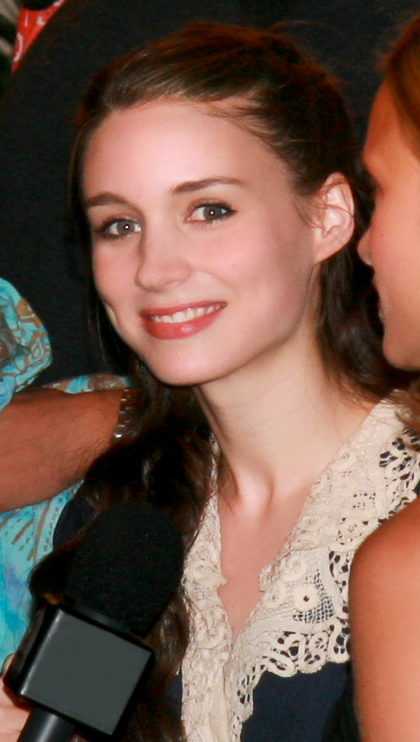
Photo: Rooney Mara, from her Wikipedia page. She and Lisbeth Salander look nothing alike. I mean that in a positive way, for both.
The blog for the book will come soon. Just finished it.
But first the movie.
The movie was a must-see on many levels: the genre of the movie and book (as you should know by now, I dig the murder/mystery thing); the positive hype of both; and, perhaps most importantly, David Fincher, the director.
First, a word about him. Impressive credits, especially Zodiac. I know he directed Se7en, a good movie but very overrated. The Social Network was a great film, about technology that has undoubtedly changed many lives (except mine; still don't have a Facebook account)--but, still, a movie about a nerdy, ingenious, socially inept guy, who may or may not have stolen the idea, the rights, and who knows what else. Not my cup of tea for a subject, but an admittedly great film. I believe Zodiac and now this movie will push him into the upper-echelon of movie buffs (Fincher's been there for the pros for some time now). I like Fincher's directing style and the intensity of his films: The Social Network was intense for its genre. The others are just...intense. Fight Club, for instance. (Good, not great.) Haven't seen Benjamin Button or Panic Room. They're on my list of things to do.
I also wanted to see this because Steven Zaillian wrote it. He penned the 'plays for Schindler's List (one of the all-time great screenplays) and for Gangs of New York, also a great screenplay (Daniel Day-Lewis should've won the Oscar for that one). Of course, he also wrote American Gangster, which was okay, but I'll pass, and Hannibal, which was just bad. But I'm a return customer for Schindler and Gangs.
Daniel Craig is always good, and it's good to see him do something well besides James Bond. (Speaking of which, it's about time for another, yes?) He's a good actor who has not, and will not, get the credit he deserves. Women swoon over him. While he's essentially a non-violent Bond in this film, he still played it well. He's got the Bond charm and charisma going, but he still had other facets going on that went over well. (Those shots where he's learning something, and the camera stays on his thoughtful and learning face--well, rumor has it that he was simply counting to ten all that time. He says he counts to ten when he's told he needs to show understanding and learning on film.)
But the cream of the crop here was Rooney Mara, as Lisbeth Salander. According to Wikipedia, she beat out Natalie Portman and Scarlett Johansson for the role. I like the first and am lukewarm by the latter, and they're both too hyped these days. Mara came out of nowhere. She played bit parts in several TV shows, a major part in the Nightmare on Elm Street remake (all good actors have to start with a bad horror film, apparently. See Johnny Depp, Renee Zellweger and too many others to mention), and a small role in Fincher's Social Network. (Both say that her part in his most recent film did not help her to get The Girl.)
Her character on film is even more realistic than the one on paper I have just finished reading. That never happens, at least for me. Without going into much detail, she absolutely nailed this role. One of the things she did in the film (and possibly this is Fincher's and Zaillian's doing as well) that Salander didn't do in the book was to stay consistent with her mono-syllabic answers and otherwise clipped speech patterns--even to those she liked or cared for. Frankly, she spoke too often (in spurts) in the book; I have known people (exactly) like Lisbeth Salander, and you'll have to take my word that such folks do not normally converse. They staccato you, or they rant at you, but they don't converse. Mara didn't in the movie, either.
In my life, I have seen a Lisbeth Salander many times. I've seen the anorexia, the internal fury, the speech patterns, the behavior, the anger in the eyes, the massive insecurity, the abuse, the addictions--In short, I've seen it all. She owned it. This movie should be seen for her performance alone. (I dare you to recognize the woman in the film as the one pictured above, but they are the same.)
Sweden itself gives a good performance, too, if you know what I mean. (I know about 40% of the internal shots were filmed in L.A.) It's obviously beautiful and cold there. The free education intrigues me, but the violence and rape stats in this trilogy--and in the many books by Henning Mankell--do not paint a pretty picture. Both authors (I know Larsson has died) try to say that the stats are horrific, possibly even worse than the U.S.'s. For now, I'd like to visit there, but not live there. Of course, I can say that about almost anywhere.
And the movie has a lot of nice touches not in the book, which I'll leave alone for now. Suffice it to say that they involve the whereabouts of a missing woman and a car crash. The movie also breaks a few rules; the big one is that the movie, like the book, continues on for quite awhile after the main mystery has been solved. I approve, especially because it is done largely for the sake of characterization. Rare, these days.
More on this, and the book, later. Go see it, even if you've already read it. And I'll be proactive and say that you should read it, too, even if you've already seen the movie.
Subscribe to:
Posts (Atom)